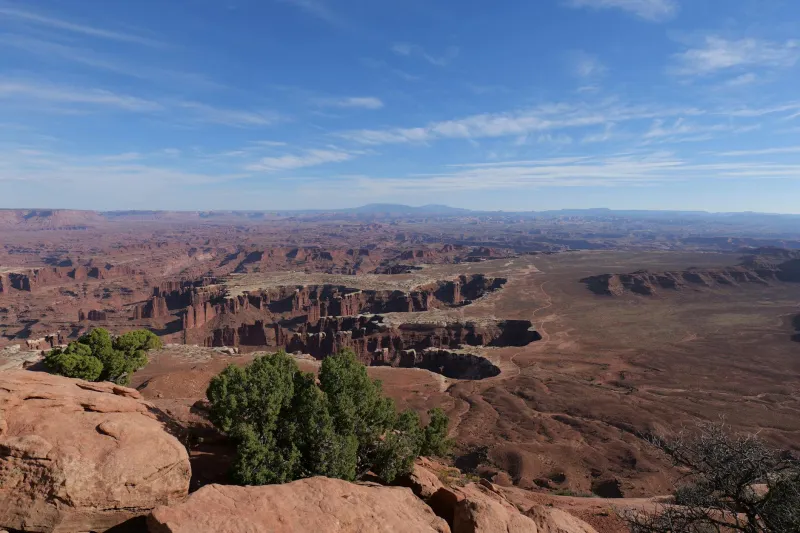
When the Founding Fathers envisioned federal land ownership, they had in mind military bases, post offices, and perhaps a capital district. They certainly didn't imagine a scenario where Washington would control 640 million acres — roughly 28% of the entire United States — with ownership concentrated so heavily in the West that states like Nevada (84.9% federal), Utah (64.9%), and Idaho (61.6%) function more like colonial territories than sovereign states.
This isn't just an abstract constitutional problem. It's an economic catastrophe playing out in real time across rural America, where entire counties struggle to fund basic services because the federal government has locked away their tax base behind bureaucratic barriers that make productive use nearly impossible.
The Numbers Tell a Devastating Story
Consider Nye County, Nevada, where 98% of the land is federally owned. The county covers 18,147 square miles — larger than nine entire states — yet generates property tax revenue from less than 2% of its territory. Local officials estimate they lose roughly $50 million annually in potential tax revenue due to federal ownership, forcing them to operate with skeletal budgets while managing an area the size of West Virginia.
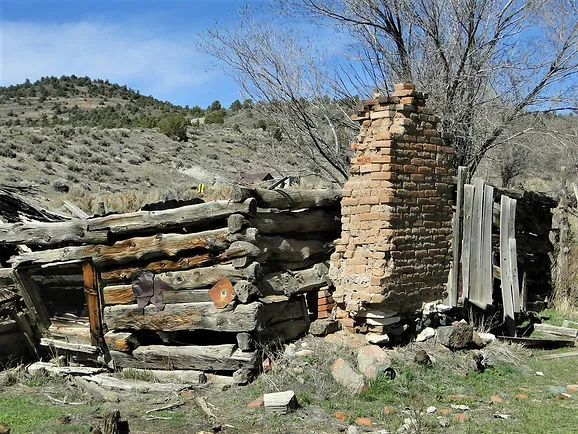 Photo: Nye County, Nevada, via static.wixstatic.com
This pattern repeats across the West. In Wyoming, federal ownership blocks energy development on millions of acres that could generate billions in royalties for local communities. Colorado's rural counties watch their young people flee to cities because federal land management policies have eliminated traditional industries like logging and mining that once sustained mountain communities.
The Bureau of Land Management and Forest Service, the two largest federal landholders, operate with budgets that prioritize environmental activism over multiple-use management. The result is forests choked with undergrowth that fuel catastrophic wildfires, grazing allotments that sit unused while ranchers go bankrupt, and mineral resources that remain untapped while America imports critical materials from hostile nations.
Constitutional Questions No One Wants to Answer
The Constitution's Property Clause grants Congress power to "dispose of and make all needful Rules and Regulations respecting the Territory or other Property belonging to the United States." Note the word "dispose" — the Founders expected the federal government to sell or transfer lands to private owners and states, not hold them in perpetuity.
Indeed, for the first century of American expansion, that's exactly what happened. The federal government acquired territories, surveyed them, and transferred ownership to settlers, states, and private entities. The Homestead Act alone transferred 270 million acres to private ownership. The Land Grant College system gave states millions of acres to fund education.
This policy changed dramatically in the Progressive Era, when conservationists convinced Washington to begin permanently retaining vast tracts. What started as a temporary stewardship role became permanent federal control, often against the wishes of local communities who understood their land far better than distant bureaucrats.
The Productivity Gap Exposes Federal Mismanagement
The contrast between federally managed and privately managed land couldn't be starker. Texas, which retained control of its public lands upon statehood, generates over $1 billion annually from its 13 million acres of state land through oil and gas leases, grazing permits, and sustainable timber harvests. These revenues fund public education and infrastructure without burdening taxpayers.
Meanwhile, federal agencies struggle to generate revenue from far larger holdings. The Forest Service operates at a massive loss, spending billions more on management than it collects in fees and permits. The BLM's energy leasing program has been systematically dismantled by environmental litigation and bureaucratic delays, turning potentially profitable lands into economic dead zones.
Private forest management demonstrates similar efficiency advantages. Weyerhaeuser and other private forestry companies maintain healthier forests, prevent catastrophic fires through active management, and generate economic value while maintaining environmental quality. Federal forests, constrained by litigation and bureaucratic paralysis, burn at unprecedented rates while contributing nothing to local economies.
The Environmental Excuse Doesn't Hold Water
Progressive defenders of federal ownership claim environmental protection justifies economic sacrifice. This argument collapses under scrutiny. Federal lands experience more severe environmental degradation than comparable private holdings precisely because political management replaces economic incentives for stewardship.
Private landowners have powerful incentives to maintain their property's long-term value. Federal agencies face no such market pressures. The result is forests that burn because bureaucrats won't allow controlled burns or timber harvests, rangelands that deteriorate because grazing permits get tied up in litigation for decades, and wildlife populations that suffer because habitat management becomes a political football rather than a scientific endeavor.
State management offers a middle path that balances environmental protection with economic productivity. State trust lands consistently outperform federal lands on both environmental and economic metrics because state managers answer to local constituencies who live with the consequences of their decisions.
The Path Forward: Federalism, Not Federal Control
The solution isn't complicated: transfer federal lands to state ownership, following the model that made Texas energy-independent and Alaska prosperous. States would maintain environmental protections while allowing responsible development that generates tax revenue and supports local communities.
Congress could start with pilot programs, transferring specific federal holdings to willing states under agreements that maintain public access while allowing economic development. Utah's recent proposal to manage federal lands within its borders offers a template for how this transition could work.
The economic benefits would be immediate and substantial. Western states could generate billions in new revenue through responsible energy development, sustainable forestry, and modernized grazing programs. Rural communities could finally fund adequate schools, hospitals, and infrastructure from their own resources rather than depending on federal subsidies.
Breaking the Colonial Model
America's Western states shouldn't function as internal colonies where distant bureaucrats control local resources while local communities struggle with poverty and population decline. The federal land monopoly represents everything the Founders opposed: concentrated power, economic control divorced from local consent, and government that serves ideology rather than citizens.
Returning these lands to state control wouldn't eliminate environmental protection — it would make conservation economically sustainable by aligning environmental stewardship with local prosperity rather than treating them as opposing forces.
The American West deserves better than bureaucratic colonialism disguised as conservation.