Across America's major cities, a quiet revolution is taking place in city halls and county courthouses. Local officials are systematically refusing to cooperate with federal immigration enforcement, releasing criminal aliens back onto the streets instead of turning them over to Immigration and Customs Enforcement (ICE). They call it compassion. The victims of the crimes that follow might use different words.
The sanctuary city movement has evolved far beyond its original conception as a humanitarian gesture. What began as policies to encourage immigrant communities to report crimes without fear has morphed into active obstruction of federal law enforcement. Cities like San Francisco, Los Angeles, New York, and Chicago now routinely ignore ICE detainer requests — formal requests to hold criminal aliens for up to 48 hours so federal agents can take them into custody.
 Photo: San Francisco, via navaway.fr
The Human Cost of Selective Law Enforcement
The consequences of these policies aren't theoretical. In 2015, Kathryn Steinle was shot and killed on a San Francisco pier by Juan Francisco Lopez-Sanchez, an illegal immigrant who had been deported five times and was released from San Francisco jail just months earlier despite an ICE detainer request. San Francisco's sanctuary policy prevented his transfer to federal custody.
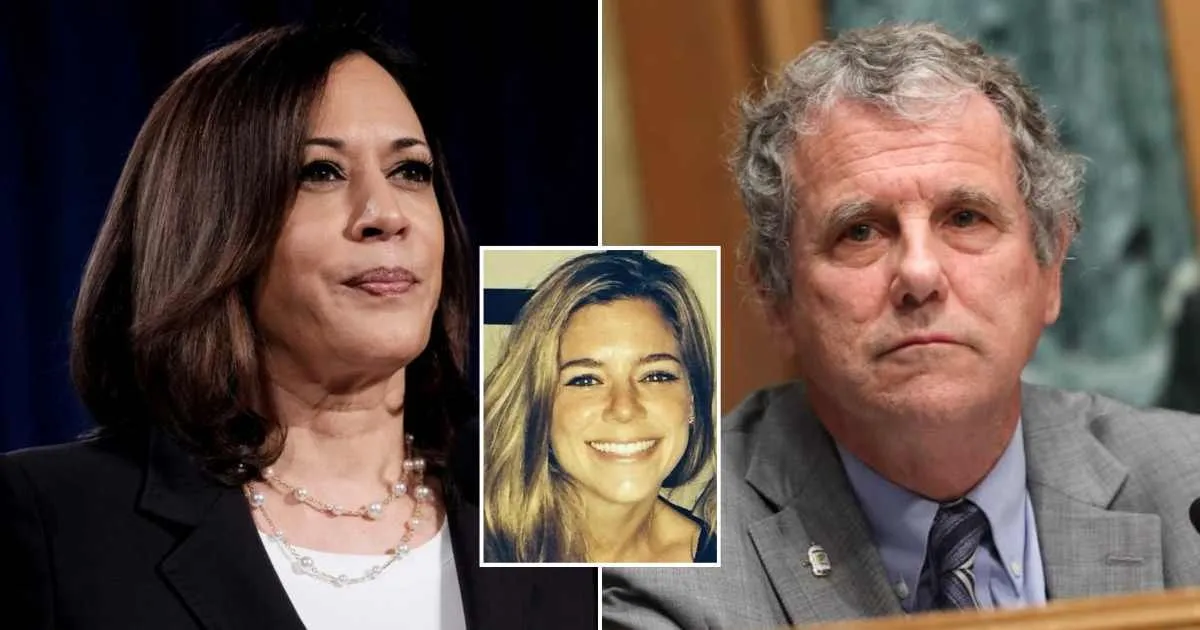 Photo: Kathryn Steinle, via dxltb3n5j8l6j.cloudfront.net
More recently, in 2023, a study by the Center for Immigration Studies found that sanctuary jurisdictions released over 17,000 criminal aliens in a single year rather than honoring ICE detainer requests. Among those released were individuals charged with serious crimes including assault, domestic violence, and drug trafficking. Within months of release, hundreds had been rearrested for new crimes.
These aren't isolated incidents — they're the predictable result of a system designed to prioritize political posturing over public safety. When local officials decide which federal laws they'll enforce and which they'll ignore, they're not just defying Washington; they're gambling with their constituents' lives.
The Constitutional Crisis Hiding in Plain Sight
Sanctuary city policies represent more than a policy disagreement — they're a fundamental challenge to the rule of law and constitutional order. The Supremacy Clause of the Constitution makes federal law supreme over state and local law. While local jurisdictions aren't required to actively assist federal enforcement, actively obstructing it crosses a constitutional line.
The Trump administration attempted to address this through funding restrictions, threatening to withhold federal grants from sanctuary jurisdictions. Legal battles ensued, with mixed results in federal courts. But the underlying constitutional question remains: can local governments simply decide which federal laws they'll respect?
Proponents argue that sanctuary policies protect immigrant communities by encouraging cooperation with local law enforcement. They claim that fear of deportation prevents immigrants from reporting crimes or serving as witnesses. This argument, while superficially appealing, crumbles under scrutiny.
First, the policies in question don't affect law-abiding immigrants who report crimes — they affect criminal aliens already in police custody. Second, there's little empirical evidence that sanctuary policies actually increase crime reporting among immigrant communities. A 2016 study by the Center for American Progress claimed to find lower crime rates in sanctuary cities, but the study failed to control for demographic and economic factors that independently affect crime rates.
The Political Calculation Behind the Compassion
The real driver of sanctuary city policies isn't public safety or constitutional principle — it's political calculation. In deep-blue cities, opposing federal immigration enforcement has become a cost-free way for politicians to signal their progressive credentials to activist bases.
Mayors and city council members can grandstand about "protecting immigrants" while shifting the real costs — increased crime, strained public services, and community tensions — onto working-class residents who lack the political clout to object effectively. It's a classic case of concentrated benefits (political points with activists) and diffuse costs (borne by the broader community).
This political dynamic explains why sanctuary policies persist even when polling shows majority opposition. A 2023 Harvard-Harris poll found that 61% of Americans oppose sanctuary city policies, including 55% of Hispanic Americans. Even in liberal strongholds, voters express concerns about public safety when criminal aliens are released instead of deported.
The Tide May Be Turning
Recent electoral results suggest that even traditionally Democratic voters are growing skeptical of sanctuary city policies. In New York City, Eric Adams won the mayoral race partly by criticizing the city's approach to public safety and immigration. In San Francisco, voters recalled progressive District Attorney Chesa Boudin, whose policies included refusing to prosecute many crimes committed by illegal immigrants.
 Photo: New York City, via www.travelandleisure.com
The 2022 midterm elections saw Republicans gain ground in suburban areas around major cities, with immigration and crime ranking as top voter concerns. Exit polls showed that even Democratic voters were increasingly worried about public safety, creating political pressure for more moderate approaches to immigration enforcement.
Federal courts are also beginning to push back against the most aggressive sanctuary policies. In 2023, a federal judge ruled that certain California sanctuary laws violated the constitutional requirement that states not interfere with federal law enforcement. While the ruling is being appealed, it signals growing judicial skepticism of unlimited local resistance to federal authority.
The Path Forward
The solution to the sanctuary city crisis isn't complicated — it requires political will. Congress could clarify that local obstruction of federal immigration enforcement violates federal law and carries specific penalties. The Justice Department could more aggressively prosecute officials who actively interfere with ICE operations.
More importantly, voters in sanctuary jurisdictions need to hold their local officials accountable for the consequences of these policies. When politicians claim that releasing criminal aliens represents "compassion," voters should ask: compassion for whom?
True compassion would protect law-abiding immigrants by ensuring that criminal aliens are removed from their communities. True compassion would prioritize the safety of American citizens and legal immigrants over the political convenience of local officials.
Sanctuary city policies represent the worst kind of political cynicism — using the language of morality to justify lawlessness, while ordinary Americans pay the price in blood.