
The Biden administration's renewed push for sweeping student loan forgiveness represents one of the most brazen wealth transfers in American political history—and it's flowing in exactly the wrong direction. While marketed as relief for struggling borrowers, the reality is that executive-driven loan forgiveness forces working-class Americans who never attended college to subsidize the advanced degrees of future doctors, lawyers, and MBA holders.
The Numbers Don't Lie About Who Benefits
According to data from the Federal Reserve and Department of Education, the distribution of student debt reveals an uncomfortable truth for forgiveness advocates. Roughly 40% of all outstanding student loan debt belongs to borrowers pursuing or holding graduate degrees—the same individuals who will earn significantly more over their lifetimes than their non-college-educated counterparts.
A typical law school graduate carries $170,000 in debt but can expect lifetime earnings exceeding $3 million. Medical school graduates average $250,000 in loans but face career earning potential of $5 million or more. Meanwhile, the median American household income sits at $70,000 annually, and nearly two-thirds of American adults lack four-year college degrees.
The Congressional Budget Office estimates that blanket loan forgiveness would cost taxpayers between $400 billion and $1 trillion, depending on the scope. That bill gets paid by everyone—including the electrician who completed a trade apprenticeship, the small business owner who worked nights to avoid debt, and the factory worker whose taxes now fund someone else's master's degree.
Constitutional Overreach Masquerading as Compassion
Beyond the economic inequity lies a fundamental constitutional problem: Congress, not the president, controls federal spending. The Supreme Court made this clear in Biden v. Nebraska, striking down the administration's initial $400 billion forgiveness scheme because such massive expenditures require explicit congressional authorization.
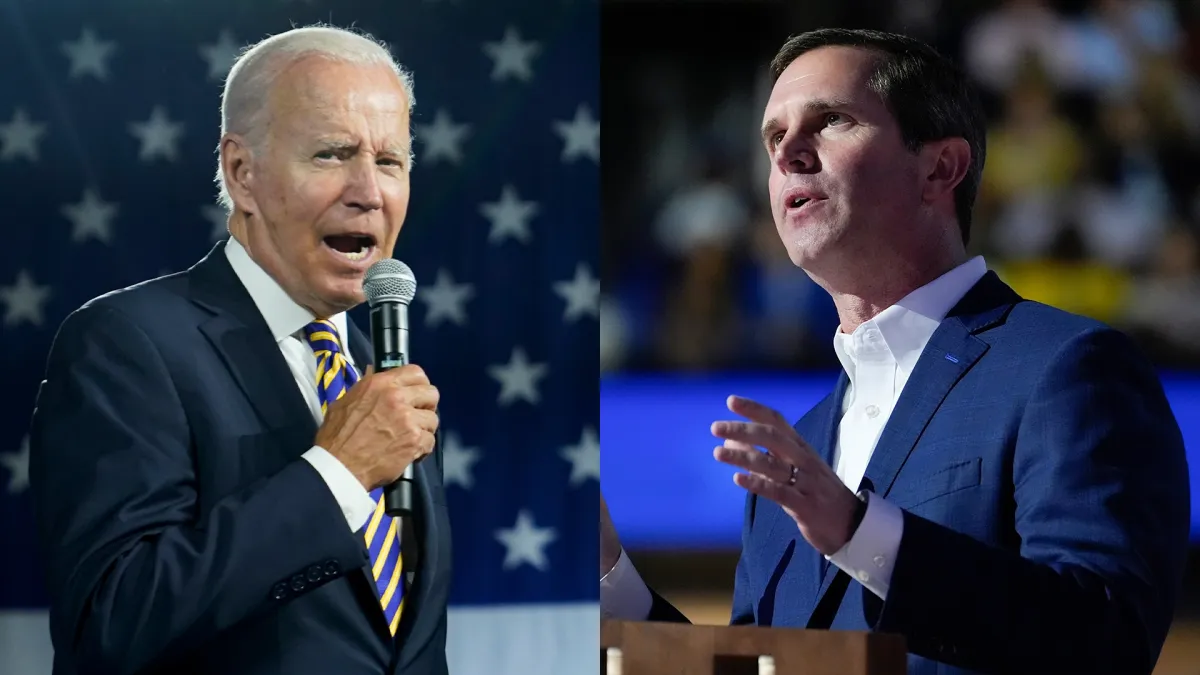 Photo: Biden v. Nebraska, via media.whas11.com
The administration's response has been to pursue forgiveness through alternative regulatory pathways, claiming authority under various Education Department programs. This shell game doesn't change the constitutional reality. Whether labeled as "income-driven repayment adjustments" or "hardship discharge," executive-driven debt cancellation without congressional approval violates the separation of powers.
The Founders designed the appropriations process to run through the people's representatives precisely to prevent unilateral wealth redistribution by executive decree. When presidents can simply cancel debts owed to the federal government, they effectively control spending without legislative oversight—a power the Constitution explicitly reserves to Congress.
The Fairness Question No Progressive Wants to Answer
Advocates frame loan forgiveness as economic justice, but they consistently avoid addressing its regressive nature. Consider two hypothetical Americans: Sarah completed community college and works as a dental hygienist, earning $45,000 annually after paying off her modest student loans. Michael attended law school, accumulated $200,000 in debt, and now works at a corporate firm earning $180,000 as a first-year associate.
Under broad forgiveness schemes, Michael receives substantial debt relief funded partially by Sarah's taxes, despite earning four times her salary and possessing far greater earning potential. This isn't progressive policy—it's reverse Robin Hood economics.
The data supports this analysis. Research from the University of Chicago shows that student loan forgiveness disproportionately benefits higher-income households, with the top income quintile receiving nearly six times more forgiveness than the bottom quintile. Even targeted forgiveness based on current income fails to address lifetime earning differentials between degree holders and non-graduates.
 Photo: University of Chicago, via cdn.britannica.com
The Real Solutions Washington Ignores
Genuine student debt reform would address the root causes driving college costs skyward, not simply socialize the consequences. Federal loan programs have enabled universities to raise tuition far beyond inflation rates, knowing students can borrow virtually unlimited amounts backed by taxpayer guarantees.
Meaningful reform would cap federal lending at levels tied to realistic post-graduation earning potential, forcing universities to justify their pricing. It would eliminate graduate school loan subsidies for high-earning professions like law and medicine, where market returns clearly justify private financing. It would strengthen income-driven repayment programs that already exist, rather than pursuing blanket forgiveness.
Most importantly, it would recognize that not everyone needs or benefits from college education. Trade schools, apprenticeships, and entrepreneurship offer paths to middle-class prosperity without accumulating massive debt. Policy should support these alternatives, not penalize those who choose them by forcing them to subsidize others' college experiences.
The Political Calculation Behind the Policy
The administration's persistence on loan forgiveness despite legal setbacks reveals the political motivations at play. College-educated voters, particularly those with advanced degrees, represent a core Democratic constituency. Suburban professionals struggling with student debt provided crucial margins in recent elections, and loan forgiveness serves as direct financial benefit to this voting bloc.
This political targeting makes the policy's regressiveness even more problematic. Working-class Americans without college degrees—the very people Democrats claim to champion—bear the tax burden for benefits flowing to more affluent, educated voters. It's identity politics masquerading as economic policy, using the federal treasury as a campaign tool.
The Broader Implications for American Governance
Executive-driven student loan forgiveness sets dangerous precedents extending far beyond education policy. If presidents can unilaterally cancel debts owed to the federal government, what prevents future administrations from forgiving other obligations? Tax debts? Small business loans? Mortgage guarantees?
The constitutional framework exists to prevent such arbitrary exercises of spending power. When that framework erodes, it undermines democratic accountability and concentrates fiscal authority in ways the Founders explicitly rejected.
Moreover, the policy signals that political connections matter more than personal responsibility. Those who made sacrifices to avoid or repay debt receive nothing, while those who borrowed heavily get rewarded. This moral hazard extends beyond individual borrowers to institutions and future students, who learn that promises to repay federal loans are merely suggestions.
Student loan forgiveness isn't progressive compassion—it's regressive wealth redistribution that forces working Americans to subsidize the career choices of future high earners while trampling constitutional limits on executive power.