
The Department of Justice under the Biden administration has abandoned even the pretense of equal justice under law. What was once whispered about in conservative circles as a "two-tiered justice system" is now documented policy, with federal prosecutors openly applying dramatically different standards depending on whether the accused wears a red hat or a blue one.
The Classified Documents Double Standard
Consider the tale of two classified document cases. When FBI agents discovered that former Vice President Mike Pence had inadvertently retained classified materials at his Indiana home, the Justice Department conducted a respectful search and closed the investigation within months. President Biden's classified document scandal — involving materials stored in multiple unsecured locations including a garage next to his Corvette — received similarly gentle treatment from Special Counsel Robert Hur.
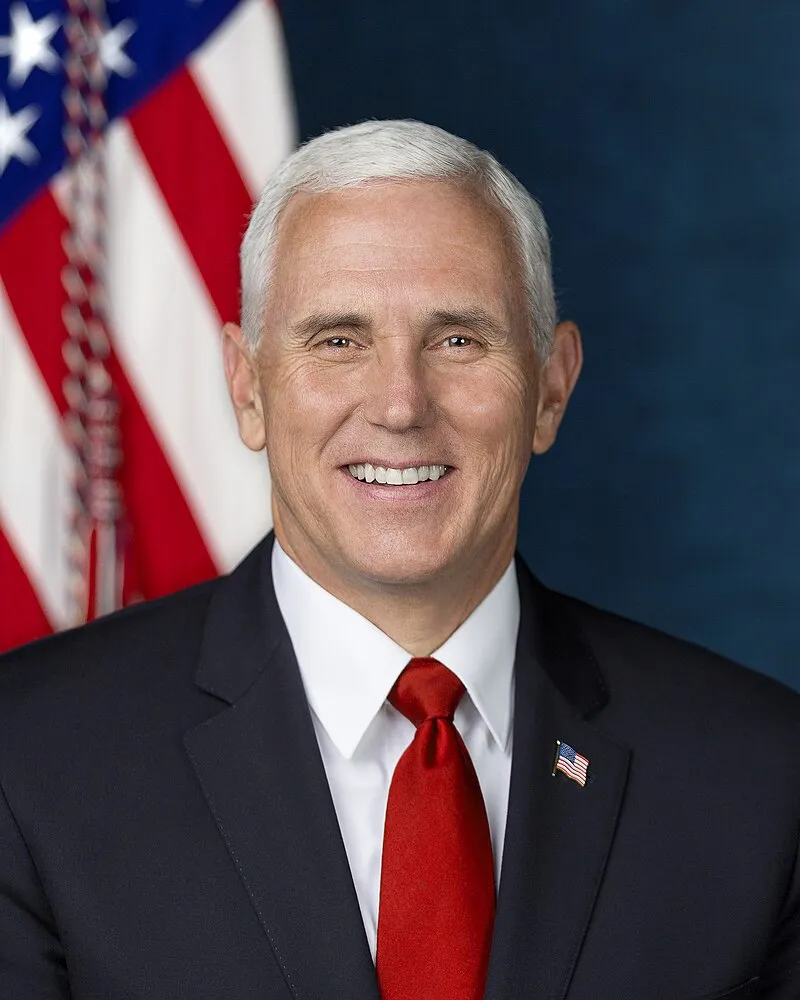 Photo of Mike Pence, via Wikidata/Wikimedia Commons
Meanwhile, Donald Trump faced an unprecedented armed FBI raid at Mar-a-Lago, complete with agents rifling through Melania Trump's personal belongings and demanding that security cameras be turned off. The contrast couldn't be starker: cooperative engagement for Democrats, shock-and-awe tactics for Republicans.
 Photo: Donald Trump, via c8.alamy.com
The charging decisions tell the same story. Biden and Pence walked free despite clear violations of classified material handling protocols. Trump faces 37 federal felony counts under the Espionage Act — charges that could result in life imprisonment. The legal standard applied appears to depend entirely on party affiliation.
Protest Prosecutions: A Study in Selective Enforcement
The disparity extends far beyond classified documents. Consider how the Justice Department has handled protest-related prosecutions over the past four years. During the 2020 Black Lives Matter riots that caused over $2 billion in property damage across American cities, federal prosecutors showed remarkable restraint. Of the thousands arrested during months of violent demonstrations, fewer than 300 faced federal charges, and many of those were quickly dropped or reduced to misdemeanors.
Contrast this with the DOJ's response to January 6th. More than 1,000 Americans have been charged federally for their actions that day, with prosecutors seeking lengthy prison sentences even for defendants who never entered the Capitol building. Grandmothers who took selfies in the rotunda have received harsher sentences than arsonists who burned police stations in Minneapolis.
The sentencing disparities are particularly striking. January 6th defendants who committed no violence and caused no property damage routinely receive months or years in federal prison. Meanwhile, Portland rioters who attacked federal buildings with Molotov cocktails often walked away with probation.
The Numbers Don't Lie
Polling data confirms what millions of Americans can see with their own eyes. A recent Rasmussen survey found that only 35% of likely voters believe the Justice Department is "fair and impartial" in its prosecutions — down from 58% just five years ago. Among independents, confidence in federal law enforcement has cratered to just 28%.
These numbers reflect a genuine crisis of institutional legitimacy. When citizens lose faith that their justice system applies the law equally, the social contract itself begins to fray. History shows us that republics don't survive the weaponization of their legal systems for long.
The Administrative State's Partisan Capture
The problem extends beyond high-profile cases to the everyday operations of federal law enforcement. Career prosecutors and FBI agents increasingly see themselves not as neutral enforcers of the law, but as resistance fighters against conservative political movements. Text messages revealed during the Trump-Russia investigation showed senior FBI officials expressing open contempt for Republican voters, calling them "retarded" and vowing to "stop" Trump's presidency.
This institutional bias has metastasized throughout the federal bureaucracy. The same agencies that slow-walked investigations into Hunter Biden's laptop and the Clinton Foundation have devoted unlimited resources to pursuing Trump and his associates. The message is clear: cross the progressive establishment, and the full weight of the federal government will come down on you.
The Path to Equal Justice
Restoring public confidence in federal law enforcement will require more than personnel changes — it demands structural reform. Congress must reassert its oversight authority, demanding detailed explanations for charging decisions and prosecutorial resource allocation. Special counsel appointments should be subject to genuine independence requirements, not the current system that allows partisan appointees to select friendly investigators.
Most importantly, the next Republican administration must resist the temptation to weaponize the Justice Department against Democrats. The solution to partisan prosecution isn't counter-partisan prosecution — it's a return to the principle that justice should be blind to political affiliation.
The Stakes for American Democracy
The Left's response to these concerns reveals their fundamental misunderstanding of constitutional governance. They argue that prosecuting Trump and January 6th defendants is necessary to "defend democracy." But democracy dies when citizens lose faith that their legal system treats all Americans equally under law.
A justice system that applies different standards based on political belief isn't justice at all — it's political warfare conducted through prosecutorial power. And once that Rubicon is crossed, there's no guarantee that today's prosecutors won't become tomorrow's defendants.
The two-tiered justice system isn't a conservative conspiracy theory anymore — it's documented federal policy, and it's destroying the rule of law one partisan prosecution at a time.