While America fixates on dramatic footage of border crossings and debates over physical barriers, a quieter but equally massive immigration crisis unfolds in plain sight across the country. According to Department of Homeland Security data, approximately 676,422 foreign nationals overstayed their visas in fiscal year 2022 alone — and that's just the ones the government bothered to count.
 Photo: Department of Homeland Security, via www.shutterstock.com
These aren't desperate asylum seekers or cartel smugglers. They're tourists, students, and temporary workers who entered the United States legally, then simply decided to stay when their authorized time expired. They blend into communities, take jobs, and live as undocumented immigrants with virtually no fear of consequences. The federal government's response? A collective shrug.
The Numbers Washington Doesn't Want to Discuss
The scale of visa overstays dwarfs many other immigration categories that dominate political discourse. DHS estimates that overstays have consistently accounted for 40-50% of all new undocumented immigrants in recent years. Yet while Congress allocates billions for border security technology and personnel, the visa overstay problem receives a fraction of that attention or resources.
The most troubling aspect isn't just the raw numbers — it's the complete lack of accountability. Of those 676,422 overstays in 2022, DHS managed to locate and remove fewer than 50,000. That's a 93% non-enforcement rate. Imagine if the IRS collected taxes with that level of effectiveness, or if local police solved crimes at a 7% rate.
Certain countries present particular challenges. Venezuelan nationals had an overstay rate of over 40% in recent years, meaning nearly half of those granted tourist or business visas simply ignored their departure requirements. Nigerian visitors overstayed at rates approaching 30%. These aren't statistical anomalies — they represent systematic abuse of America's legal immigration system.
The Technology That Doesn't Exist
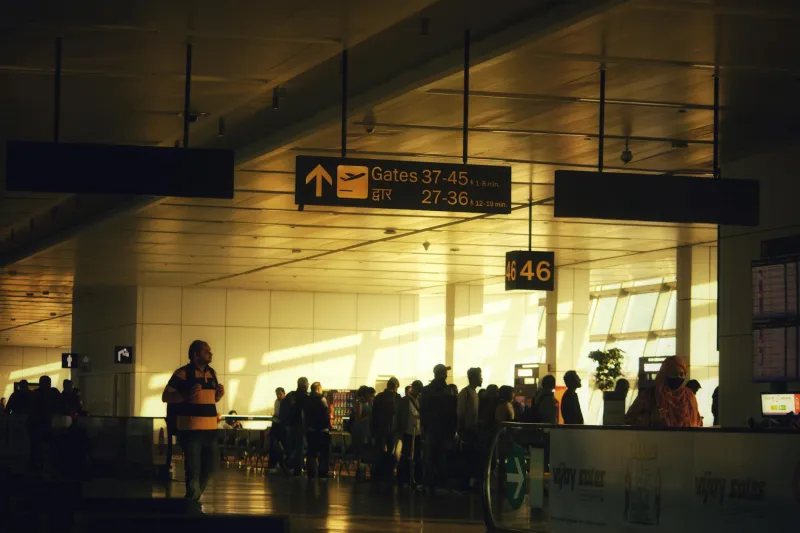
Part of the problem stems from an almost comical failure of government competence. The United States, despite spending over $100 billion annually on homeland security, still lacks a comprehensive biometric exit system at airports and seaports. We can track your Amazon package from warehouse to doorstep, but we can't determine whether a foreign visitor actually left the country when their visa expired.
Congress has mandated the creation of such a system multiple times over the past two decades. The 1996 Immigration Act required it. The 9/11 Commission recommended it. The 2004 Intelligence Reform Act demanded it again. Yet here we are in 2024, still relying on airline passenger manifests and honor-system departures to track who's supposed to leave.
The few pilot programs that have been implemented reveal the system's potential effectiveness. A limited biometric exit program at select airports showed that current overstay estimates likely undercount the true scope of the problem by 20-30%. In other words, the crisis is even worse than the official statistics suggest.
The Enforcement Vacuum
Even when DHS identifies visa overstays, enforcement remains largely theoretical. Immigration and Customs Enforcement (ICE) maintains that it prioritizes overstays who pose public safety or national security risks, but this selective enforcement creates a de facto amnesty for millions of others.
The practical message sent to potential overstays worldwide is clear: if you can avoid getting arrested for a serious crime, you can likely remain in the United States indefinitely. This perverse incentive structure makes a mockery of legal immigration processes and creates unfair advantages for those willing to break the rules over those who follow them.
Consider the contrast with other visa violations. Overstay your student visa by working off-campus without authorization, and you might face removal proceedings. But overstay your tourist visa by five years while working illegally, and you'll likely never encounter immigration enforcement at all.
The Left's Convenient Blind Spot
Progressive immigration advocates, who regularly denounce border enforcement as inhumane, remain conspicuously silent about visa overstays. This selective outrage reveals the intellectual dishonesty underlying much of the immigration debate. There are no family separations or detention facilities involved in overstay enforcement — just basic rule of law and administrative competence.
The standard liberal response involves hand-waving about "comprehensive immigration reform" or claims that overstays contribute economically to their communities. But this misses the fundamental point: a immigration system where the rules are optional isn't a system at all. It's managed chaos that undermines both legal immigration pathways and national sovereignty.
Some argue that visa overstays represent a lower priority than border security because they at least underwent initial screening. This argument collapses under scrutiny. A tourist visa requires minimal vetting compared to permanent residence applications, and overstaying demonstrates a willingness to violate immigration law that should trigger enforcement, not amnesty.
The Path Forward
Fixing the visa overstay crisis requires neither new legislation nor additional funding — just basic administrative competence and political will. DHS could implement biometric exit tracking at major airports within two years if directed to do so. ICE could prioritize overstay enforcement using existing resources currently devoted to lower-priority cases.
The technology exists, the legal authority is clear, and the public interest is obvious. What's missing is leadership willing to acknowledge that immigration enforcement means more than just securing the physical border.
Several states have begun taking matters into their own hands, using driver's license databases and employment verification systems to identify likely overstays. Florida's recent legislation requiring hospitals to track patient immigration status, while controversial, represents the kind of interior enforcement that federal abdication makes necessary.
Beyond the Border Fixation
America's immigration debate has become dangerously narrow, focusing almost exclusively on dramatic border encounters while ignoring the systematic breakdown of interior enforcement. Visa overstays represent immigration law violation in slow motion — less telegenic than border crossings but equally corrosive to the rule of law.
True immigration reform must address both border security and interior enforcement with equal seriousness. Building walls while ignoring visa overstays is like locking the front door while leaving every window open.
The visa overstay crisis exposes uncomfortable truths about American governance: that federal agencies can simply choose not to enforce laws they find inconvenient, that Congress can mandate solutions for decades without results, and that selective law enforcement has become the norm rather than the exception. Until politicians treat immigration law as actual law rather than a suggestion, the crisis will only deepen — one expired visa at a time.