The Accreditation Stranglehold — How a Federal Credential Cartel Keeps College Costs Astronomical and Competition Illegal

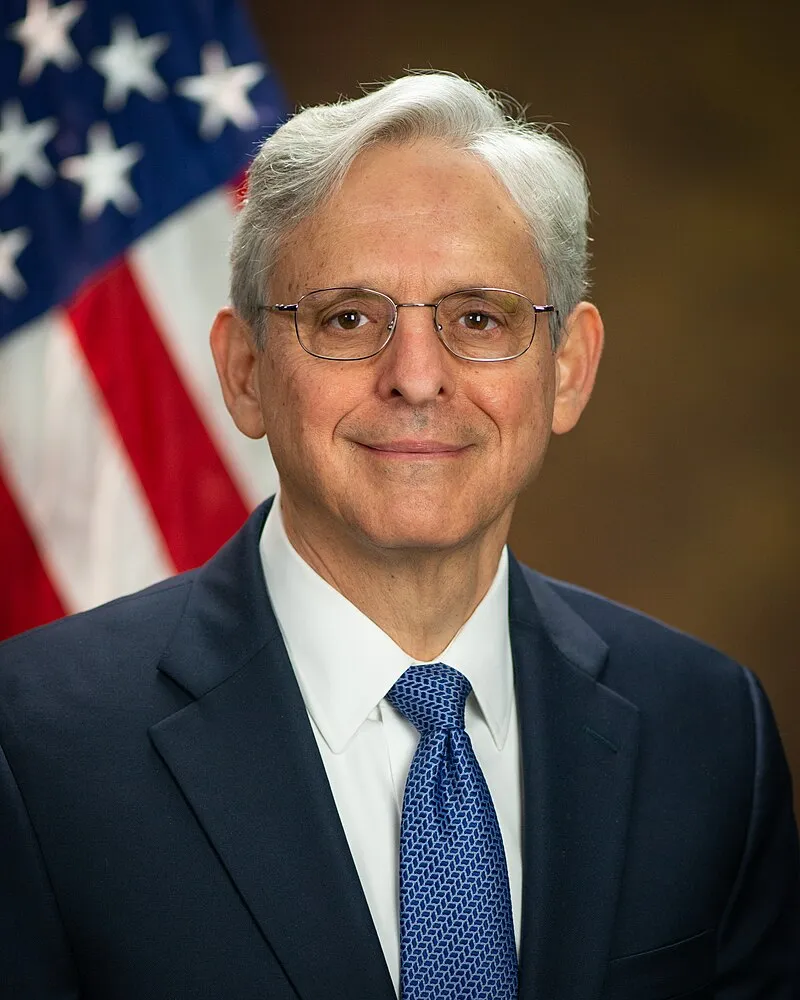
Photo of Betsy DeVos, via Wikimedia Commons
The Gatekeeper Nobody Elected
Americans spend more on higher education than virtually any other nation on earth, and they have less to show for it with each passing decade. Tuition at four-year institutions has risen at roughly twice the rate of general inflation for the past forty years, according to data from the National Center for Education Statistics. Student loan debt has crossed $1.7 trillion. And yet the political conversation almost exclusively focuses on debt relief — treating the symptom while leaving the disease entirely untouched.
The disease has a name: accreditation. Specifically, the federally enforced regional accreditation system that determines which institutions can access Title IV federal student aid — Pell Grants, subsidized loans, and work-study funding. If your institution is not accredited by one of the recognized regional accrediting bodies, your students cannot access federal financial aid. And because federal financial aid is the financial oxygen of American higher education, this single chokepoint effectively determines who can compete in the education marketplace and who cannot.
This is not quality control. It is a cartel.
How the System Entrenches Itself
Accrediting agencies are private, nonprofit organizations — but they derive their authority entirely from federal recognition by the Department of Education. The arrangement creates a peculiar regulatory structure: the government does not directly accredit institutions, but it empowers a small set of private bodies to serve as mandatory gatekeepers for federal funding access. Those bodies, in turn, are dominated by existing accredited institutions — meaning the entities most threatened by new competition have structural influence over who gets admitted to the club.
The criteria accreditors apply have expanded far beyond academic quality into governance structures, financial ratios, faculty credentialing requirements, and increasingly, diversity and equity metrics. The result is a compliance burden that is manageable for established universities with large administrative staffs but prohibitive for lean, innovative startups in the education space. A coding bootcamp that places 85 percent of graduates in six-figure software engineering roles cannot access federal student aid. A four-year liberal arts college with a 40 percent graduation rate and graduates carrying $60,000 in debt can. The system does not measure outcomes — it measures conformity to an institutional template designed in the mid-twentieth century.
The Trade and Vocational Education Penalty
The accreditation bottleneck falls with particular cruelty on vocational and technical education — precisely the sector that could do the most to address the skilled trades shortage that is now a genuine economic constraint on American infrastructure, homebuilding, and manufacturing. Electricians, plumbers, HVAC technicians, and welders are in acute short supply across the country. Median wages for experienced tradespeople now routinely exceed those of college graduates in many humanities and social science fields, without the accompanying debt burden.
Yet the accreditation framework was built around a four-year, campus-based residential model. Community colleges and technical programs that want to scale rapidly, partner with industry, or offer flexible credentialing pathways face accreditation requirements that assume a traditional institutional structure. The regulatory architecture actively impedes the kind of nimble, employer-linked training programs that the labor market is demanding.
The National Student Clearinghouse Research Center has documented a sustained decline in community college enrollment over the past decade. Some of that reflects demographic shifts, but regulatory barriers to program expansion and credential recognition have undeniably constrained the sector's ability to serve non-traditional learners.
The Strongest Defense of the Status Quo
The most serious argument for the current accreditation regime is consumer protection. Without a quality threshold, the concern goes, the federal financial aid system becomes an open invitation for diploma mills and fraudulent operators to harvest student loan dollars while delivering worthless credentials. This concern is not imaginary — the for-profit college scandals of the 2010s, involving institutions like ITT Technical Institute and Corinthian Colleges, resulted in genuine harm to students who borrowed heavily for credentials that the labor market did not recognize.
But this argument proves too much. The existence of fraud in a market is an argument for fraud prosecution and transparent outcome disclosure, not for a government-sanctioned monopoly that restricts entry. The FDA's role is to prevent dangerous drugs from reaching market — not to ensure that only three pharmaceutical companies can sell medications. Accreditation reformers are not arguing for no standards; they are arguing for outcome-based accountability that measures what graduates actually earn and achieve, rather than whether an institution has the right committee structures and faculty-to-administrator ratios.
What Reform Would Actually Look Like
A serious conservative approach to higher education deregulation would pursue several parallel tracks. First, expanding recognition of alternative credentials — industry certifications, apprenticeship completions, competency-based assessments — for purposes of federal aid eligibility, breaking the exclusive link between accreditation and funding access. Second, empowering new accrediting bodies with explicit mandates to evaluate institutions on employment outcomes and graduate earnings, rather than process compliance. Third, creating direct federal recognition pathways for institutions that meet transparent outcome benchmarks, bypassing the incumbent-dominated accreditor structure entirely.
Several Republican members of Congress have introduced legislation along these lines in recent sessions, and the Trump administration's first term included Department of Education proposals to reform accreditor recognition standards. The momentum exists. What has been lacking is the sustained political will to take on an industry that spends heavily on lobbying and frames every reform effort as an attack on educational quality.
The Political Stakes
Higher education costs are not an abstract policy concern — they are a generational economic wound affecting millions of working and middle-class families who did what they were told, pursued credentials the system said were necessary, and emerged with debt loads that have distorted their financial lives for decades. Conservatives who have correctly identified government-enforced market distortions in healthcare, housing, and energy have an intellectually consistent obligation to apply the same diagnosis to higher education.
The accreditation cartel is not protecting students. It is protecting institutions — and the political coalition that depends on them.
The Verdict
Breaking the accreditation monopoly would do more to reduce college costs than every debt forgiveness proposal ever written — because it would attack the price, not just the bill.