Robes Over Congress — How Activist Federal Judges Became the Real Authors of America's Open Border Policy
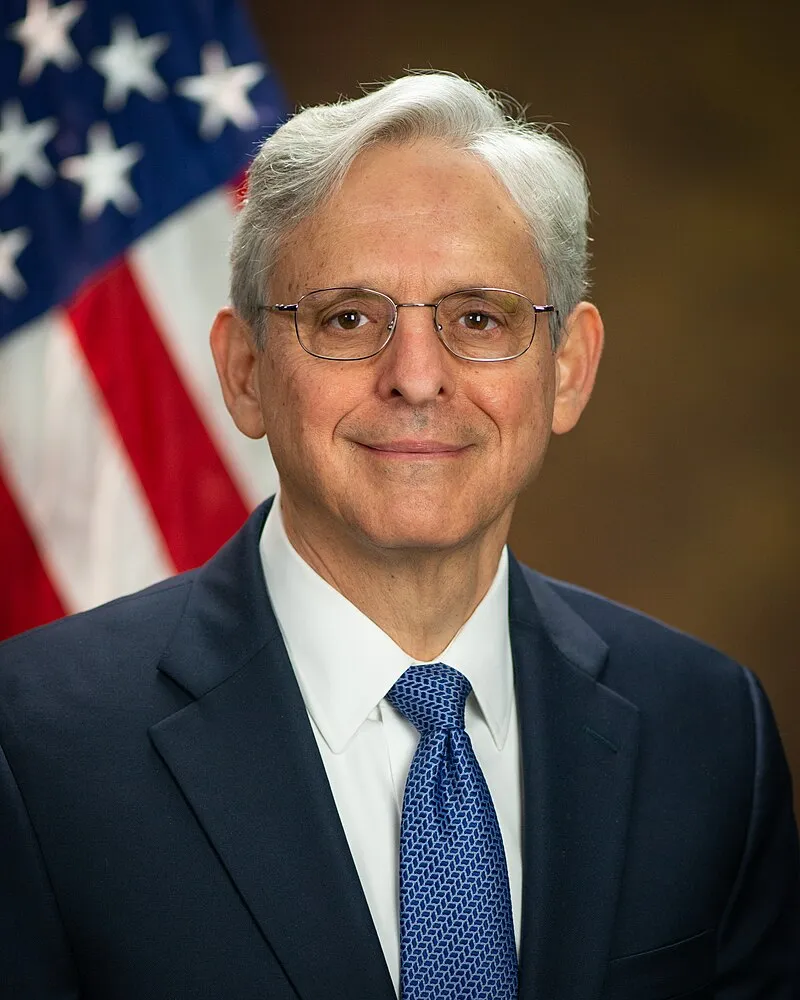
Photo of Merrick Garland, via Wikimedia Commons
The Bench as Border Policy
The story of American immigration dysfunction is typically told as a failure of congressional will — a broken legislature unable to pass comprehensive reform, leaving the executive branch to improvise with executive orders that the next administration reverses. That narrative is not entirely wrong, but it increasingly misses the more consequential action, which is happening not in committee rooms on Capitol Hill but in federal district courthouses in San Francisco, New York, and Seattle.
Over the past several years, and with accelerating frequency since the start of the Trump administration's second term, federal district court judges have issued injunctions blocking immigration enforcement operations, halting deportation flights, restricting ICE workplace raids, and in some cases ordering the release of individuals detained pending removal proceedings. These are not routine applications of settled law. Many represent aggressive expansions of judicial authority into executive branch operational decisions — and the pattern is too consistent and too geographically concentrated to be coincidental.
Injunctions as Veto Power
The mechanism being deployed is the nationwide injunction — a judicial tool that allows a single district court judge to halt federal government action across the entire country, regardless of whether the parties before the court represent a national class of affected individuals. This instrument has been criticized by legal scholars across the ideological spectrum, including Justice Clarence Thomas, who wrote in 2018 that nationwide injunctions have "no basis in traditional equitable practice" and represent "an expansion of judicial power" that the Constitution does not support.
Despite that criticism, the tool has been weaponized with remarkable effectiveness against immigration enforcement. When the Trump administration moved to end the practice of catch-and-release for asylum seekers, district court judges in California issued injunctions blocking implementation. When ICE conducted workplace enforcement operations targeting employers of unauthorized workers, legal challenges in sympathetic jurisdictions produced temporary restraining orders that delayed or disrupted operations. When the administration moved to expedite removal proceedings for individuals with prior deportation orders, litigation in the Ninth Circuit produced stays that kept those individuals in the country pending years of appellate review.
The cumulative effect is not a series of discrete legal setbacks. It is a systematic degradation of the executive branch's capacity to enforce existing immigration statutes — statutes that Congress passed and that the executive has a constitutional obligation to execute.
The Geographic Pattern
The clustering of these rulings is not random. Federal district courts in California, particularly those in the Northern and Southern Districts, along with courts in Washington State, New York, and Massachusetts, have produced a disproportionate share of the injunctions blocking immigration enforcement. These are jurisdictions with large immigrant populations, progressive legal cultures, and federal benches populated predominantly by judges appointed by Democratic administrations.
This geographic concentration matters because it creates a forum-shopping dynamic in which advocacy organizations — many of them well-funded nonprofits with explicit open-borders policy goals — file their most aggressive challenges in the venues most likely to produce favorable rulings. The ACLU, the National Immigration Law Center, and similar organizations have become sophisticated litigation machines, and their venue selection is strategic, not accidental.
The result is that a judge in San Francisco, ruling on a case brought by an advocacy group with no direct stake in border security outcomes, can functionally override enforcement decisions made by the Secretary of Homeland Security and implemented by thousands of federal law enforcement officers.
What the Law Actually Says
Conservative frustration with this pattern is not simply a preference for stricter enforcement — it is rooted in a straightforward reading of constitutional structure. Article II of the Constitution vests executive power in the President, who is charged with taking care that the laws be faithfully executed. Immigration statutes passed by Congress — including the Immigration and Nationality Act — grant the executive branch broad discretionary authority over enforcement priorities, removal proceedings, and detention decisions. Courts have historically been reluctant to second-guess executive discretion in this domain, particularly on matters touching national security and foreign policy.
The current wave of injunctions represents a departure from that restraint. In multiple cases, district court judges have substituted their own policy judgments for those of executive branch officials, issuing rulings that go beyond legal interpretation into operational micromanagement. When a federal judge orders ICE to release a specific detainee, or prohibits enforcement operations in a defined geographic area, or requires the government to accept asylum claims that existing regulations would otherwise bar, that judge is not interpreting law — that judge is making law.
The Counter-Argument Examined
The most coherent defense of judicial intervention in immigration enforcement rests on due process and equal protection concerns. Individuals in removal proceedings have constitutional rights, and courts have a legitimate role in ensuring that the executive branch does not violate those rights through arbitrary or procedurally defective action. Some of the injunctions issued in recent years have addressed genuine procedural violations — cases where the administration moved to deport individuals without adequate notice or without following established regulatory procedures.
These are legitimate judicial functions, and conservatives should not dismiss them. The rule of law applies to the government as well as to the governed. But there is a significant distance between reviewing whether an individual's due process rights were respected in a specific proceeding and issuing a nationwide injunction that halts an entire category of enforcement operations for millions of potential cases. The former is constitutional adjudication. The latter is policy-making, and the Constitution assigns that function to the legislative and executive branches.
The Broader Implications
If the current pattern continues, it will produce a democratic accountability crisis that extends far beyond immigration. When unelected federal judges in sympathetic jurisdictions can effectively veto executive branch enforcement decisions through nationwide injunctions, the electoral consequences of choosing an administration committed to border security are substantially nullified. Voters who elect a president on an immigration enforcement platform — as they did in 2016 and again in 2024 — have a reasonable expectation that the administration they elected will be permitted to implement the policies it was elected to implement, subject to legitimate constitutional constraints.
The Supreme Court has shown some willingness to rein in the most aggressive applications of nationwide injunctive relief, and the current Court's originalist majority may be prepared to address the structural question Justice Thomas raised in 2018. But appellate correction is slow, and the damage to enforcement capacity accumulates in real time.
Congress also has tools it has been reluctant to use: jurisdiction-stripping legislation that limits district court authority in immigration enforcement cases, and appropriations riders that defund compliance with judicially mandated enforcement restrictions. These are aggressive remedies, and they carry their own constitutional complexities — but they are available to a legislative branch serious about reasserting its constitutional role.
The Verdict
When a single district court judge in San Francisco can functionally repeal immigration enforcement for three hundred million Americans, the problem is not the border — it is the bench.