The Federal Surveillance Grid in Your Neighborhood — How 'Smart City' Grants Are Building a Monitoring Network You Never Approved
The Infrastructure Bill's Hidden Payload
When Congress passed the Infrastructure Investment and Jobs Act in November 2021 — a $1.2 trillion package that drew bipartisan support and was signed by President Biden — most Americans understood it as a roads-and-bridges bill. Fix the potholes. Replace the aging bridges. Upgrade the electrical grid. That framing was not wrong, exactly. But it was incomplete in ways that matter enormously to anyone who cares about civil liberties and the limits of government power.
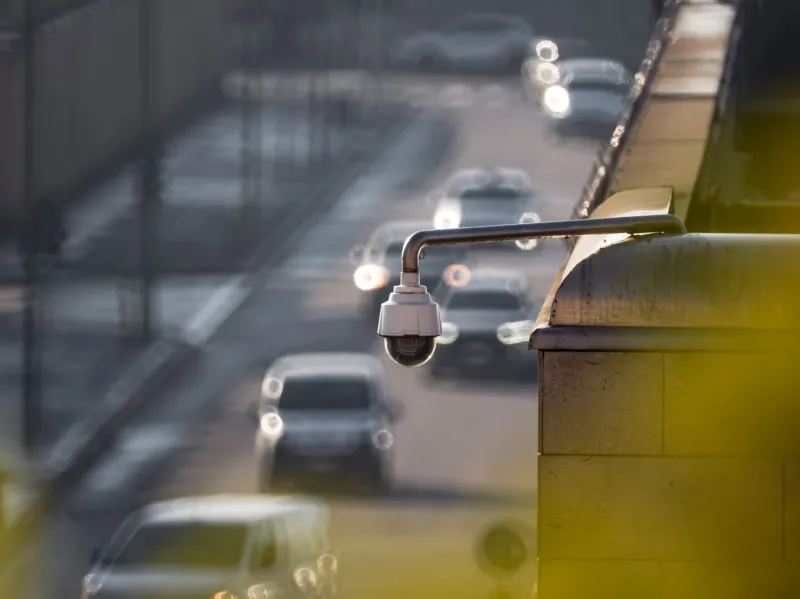
Embedded within the legislation, and in the grant programs administered through agencies including the Department of Transportation, the Department of Homeland Security, and the Department of Commerce's National Telecommunications and Information Administration, are billions of dollars earmarked for what bureaucrats call "smart city" infrastructure. The term sounds benign — and some of what it funds genuinely is benign. But a significant and underreported portion of that money is flowing directly into surveillance technology: automated license plate readers, AI-enabled camera networks, real-time pedestrian tracking systems, and data-sharing platforms that aggregate information across multiple city agencies and, in some cases, federal databases.
The question that nobody in Washington seems particularly eager to answer is: who authorized this, and what are the limits?
What 'Smart City' Money Actually Buys
The Smart Cities Council, a technology industry consortium that advises municipal governments on federal grant applications, lists among its priority infrastructure categories "intelligent transportation systems," "public safety analytics," and "connected infrastructure" — all of which, in practice, involve the deployment of sensor networks that collect continuous data on the movement of vehicles and people through public spaces.
Federal grants under the RAISE (Rebuilding American Infrastructure with Sustainability and Equity) program and the SMART (Strengthening Mobility and Revolutionizing Transportation) grants program have funded projects in cities including Columbus, Ohio; Kansas City, Missouri; and Louisville, Kentucky, that include license plate reader arrays, Bluetooth and WiFi probe sensors that detect and track mobile devices, and camera systems with computer vision capabilities. Louisville's federally funded "connected vehicle" pilot, for instance, involves roadside infrastructure that communicates with — and collects data from — passing vehicles.
 Photo: Louisville, Kentucky, via www.lifewire.com
 Photo: Kansas City, Missouri, via i.pinimg.com
 Photo: Columbus, Ohio, via reviewit.pk
In many of these deployments, the data is not merely collected and discarded. It is stored, often with retention periods measured in months or years, and shared with law enforcement agencies under data-sharing agreements that residents have had no meaningful opportunity to review or contest. The contractors building these systems include major technology firms with their own commercial incentives to aggregate and monetize location and behavioral data.
The Fourth Amendment Problem Nobody Is Discussing
The constitutional framework governing government surveillance of public spaces has evolved significantly in recent years, and not always in the direction of expanding government authority. In Carpenter v. United States (2018), the Supreme Court ruled 5-4 that the government's warrantless collection of historical cell-site location data violated the Fourth Amendment — a significant departure from the traditional doctrine that information voluntarily shared with third parties carries no reasonable expectation of privacy.
Chief Justice John Roberts, writing for the majority, noted that the "seismic shifts in digital technology" required the Court to reconsider how traditional privacy principles apply to data that can reconstruct a person's movements comprehensively over time. The logic of Carpenter applies with considerable force to smart city surveillance networks: a system that continuously tracks a vehicle's or person's movement through a city, stores that data, and makes it available to law enforcement is precisely the kind of comprehensive location monitoring that the Court found constitutionally problematic when conducted through cell phone carriers.
Yet municipalities deploying these systems with federal grant money are largely proceeding without serious legal review of their compliance with Carpenter and its implications. The federal agencies disbursing the grants have not, to date, established uniform Fourth Amendment compliance standards as a condition of funding. This is not an oversight. It is a choice — and it is a choice that should alarm anyone who takes the Bill of Rights seriously as a practical constraint on government power, not merely a rhetorical aspiration.
Big Tech's Seat at the Table
The commercial dimension of smart city surveillance deserves scrutiny that it rarely receives. The primary contractors building these systems are not neutral government vendors. They are private technology corporations — Motorola Solutions, Axon Enterprise, Palantir Technologies, and a constellation of smaller firms — with commercial interests in the data these systems generate and the long-term service contracts that maintain them.
The relationship between federal grant funding, municipal procurement, and private technology contracts creates a financial ecosystem in which the incentive structure runs entirely in the direction of more surveillance, more data collection, and more integration — regardless of whether any of that serves the public interest. Once a city has accepted federal money to build a license plate reader network, it has also accepted a dependency on the contractor that built it, the software platform that runs it, and the federal grant renewal that funds its maintenance. The surveillance infrastructure becomes self-perpetuating.
This is precisely the kind of public-private entanglement that small-government conservatives have long warned about in other contexts — and it deserves the same scrutiny here, regardless of whether the technology involved sounds futuristic and appealing.
The Consent Problem
Perhaps the most fundamental objection to the smart city surveillance expansion is not legal but democratic: none of it has been put to voters in any meaningful way. Federal grant programs are designed and administered by executive branch agencies. Municipal governments apply for and accept the money through administrative processes that rarely involve public hearings on surveillance policy. The residents of a city may notice a new camera pole on their street corner, but they will not find in any ballot measure, town hall agenda, or city council vote a direct question: "Should we build a system that tracks your vehicle's movements through the city and stores that data for 18 months?"
The answer to that question, if it were actually asked, might well be yes — or it might be a resounding no, with conditions. The point is that it is not being asked. Federal money is being used to make surveillance infrastructure decisions that properly belong to the communities being surveilled, and the communities are being presented with the results as a fait accompli dressed up as progress.
Limited government is not an abstract principle. It means, concretely, that the government does not build monitoring networks in your neighborhood without your knowledge and consent. Washington has quietly decided that principle is negotiable. It is not.
When federal infrastructure dollars become the funding mechanism for a domestic surveillance architecture that no community voted for, the question is no longer whether the technology works — it is whether the republic does.