Ghost Offices and Full Paychecks — The Federal Remote Work Scandal Is a Taxpayer Disgrace
The Most Expensive Empty Buildings in America
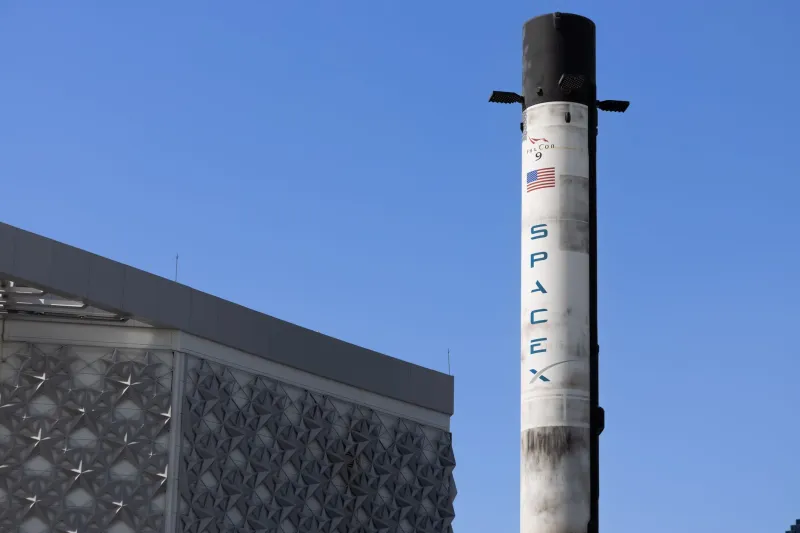
Imagine paying the full mortgage on a large office building, keeping the lights on, maintaining the HVAC system, funding the security staff, and servicing the elevators — all for a building that sits between 10 and 25 percent occupied on any given workday. Now imagine doing that for hundreds of buildings simultaneously, across every major American city, at a cost measured in the billions of dollars annually. That is the current state of the federal government's real estate footprint, and it is one of the most straightforward examples of government waste hiding in plain sight.
The Government Accountability Office has documented the problem in stark terms. A 2023 GAO report examining 24 federal agency headquarters buildings in the Washington metropolitan area found that most were being used at dramatically reduced levels — some as low as single-digit utilization rates on a typical workday. The report noted that agencies had failed to develop credible plans for right-sizing their real estate portfolios in response to the post-pandemic shift to remote work, and that the federal government was continuing to spend billions maintaining space it was not using. The General Services Administration, which manages the federal real estate portfolio, oversees approximately 370 million square feet of space — a footprint that made sense when federal workers were expected to show up to work. It makes considerably less sense now.
The Numbers Behind the Waste
The fiscal dimensions of this problem are not trivial. The federal government spends roughly $2 billion annually on rent for privately leased office space alone, according to GSA data — and that figure does not capture the full cost of operating and maintaining the government-owned portion of the portfolio, which includes some of the most expensive real estate in the country. The Office of Management and Budget has acknowledged that the federal real estate footprint represents a significant inefficiency, and successive administrations have periodically announced plans to consolidate or dispose of underutilized properties.
Those plans have consistently stalled. The obstacles are partly bureaucratic — disposing of federal property involves layers of review, interagency coordination, and legal requirements that make even straightforward transactions slow and costly. But they are also political. Federal employee unions, which wield considerable influence over the terms and conditions of federal work, have treated remote work arrangements as a hard-won benefit to be defended vigorously. The American Federation of Government Employees, the largest federal employee union, has consistently opposed return-to-office mandates, framing them as attacks on worker flexibility rather than questions of taxpayer accountability.
What Federal Unions Won't Acknowledge
The remote work debate in the federal sector is often framed as a question of employee preferences versus management prerogatives — a labor-management dispute dressed up in policy language. That framing is convenient for the unions and misleading for everyone else. The actual question is simpler and more consequential: are federal employees delivering the level of service and productivity that American taxpayers are paying for, and is remote work compatible with that standard?
The honest answer is that nobody knows, because the federal government has not developed the performance measurement infrastructure to answer the question rigorously. Unlike private sector employers — who have spent the post-pandemic years wrestling seriously with hybrid work productivity, measuring output, and making data-driven decisions about office requirements — federal agencies have largely continued to pay for remote work arrangements without establishing clear metrics for what those arrangements are supposed to produce.
The DOGE initiative under the Trump administration, led by Elon Musk, has brought renewed attention to this accountability gap. Among its early actions was a directive requiring federal employees to return to in-person work or face separation — a move that triggered immediate legal challenges from federal unions and considerable alarm from Democrats who characterized it as an attempt to purge the civil service. The legal battles are ongoing, and some federal courts have issued temporary stays on aspects of the return-to-office push.
But the underlying principle is sound: an employer — including the federal government — has a legitimate interest in knowing where its employees are, what they are doing, and whether the work is getting done. The fact that federal unions have made that basic accountability expectation legally and politically difficult to enforce is itself a symptom of how thoroughly the balance of power in federal employment has shifted away from taxpayers.
The Strongest Counter-Argument
Defenders of federal remote work make two serious arguments that deserve direct engagement. First, they argue that remote work has allowed the federal government to recruit talent from outside the expensive Washington metropolitan area, broadening the labor pool and potentially reducing salary costs in high-cost-of-living locations. Second, they point to studies suggesting that remote workers can be as productive as or more productive than in-office counterparts, particularly for knowledge-work tasks.
Both points have some empirical grounding, and neither is sufficient to justify the current arrangement. The talent recruitment argument is legitimate in principle but has not been systematically deployed — the federal government has not restructured its hiring and compensation to take advantage of geographic flexibility in any coherent way. And the productivity research on remote work is genuinely mixed, particularly for collaborative tasks, supervisory roles, and work that involves interagency coordination — all of which are central to how the federal government actually functions.
More fundamentally, the question of federal remote work cannot be answered by reference to private sector productivity studies alone. Federal employees perform functions — regulatory enforcement, benefits adjudication, national security coordination — where accountability, oversight, and institutional culture matter in ways that are difficult to capture in productivity metrics. The erosion of those qualities, which remote work can accelerate, has costs that do not show up in any GAO report.
A Question of Basic Accountability
The return-to-office push is not, at its core, about whether federal employees are capable of working from home. Some undoubtedly are, and some roles genuinely accommodate remote arrangements. The push is about establishing the basic principle that the people who spend taxpayer money are accountable to the taxpayers who provide it — and that accountability requires some level of visibility, oversight, and institutional presence that cannot be fully replicated through a Zoom call.
The federal government is not a technology startup. It is not competing for talent with Silicon Valley on the basis of workplace flexibility perks. It is a public institution funded by mandatory taxation, performing functions that the American people have authorized through their elected representatives. The people who work within it owe a standard of accountability that goes beyond what any private employer would demand — not less.
 Photo: Silicon Valley, via i.ytimg.com
The billions spent maintaining empty federal buildings are waste by any definition. But the deeper cost of the remote work arrangement is harder to quantify and more important: a federal bureaucracy that has become increasingly disconnected from the oversight structures, institutional norms, and public accountability that justify its existence.
Taxpayers deserve a government that shows up to work — and if that standard is controversial, the problem is bigger than anyone in Washington wants to admit.