Billions for Kabul, Nothing for Kansas — The Foreign Aid Accountability Reckoning Washington Keeps Avoiding

In fiscal year 2023, the United States spent approximately $72 billion on foreign assistance, according to figures compiled by the State Department and USAID — a number that does not include the supplemental military aid packages passed by Congress outside the regular appropriations process. To put that figure in context: it exceeds the annual GDP of roughly 100 individual countries. It is more than the federal government spends on veterans' benefits, more than the combined budgets of the Departments of Commerce, Interior, and Justice, and more than enough to eliminate the federal income tax burden of every American earning under $30,000 per year.
Yet when Congress debates whether to extend a modest middle-class tax cut, the floor speeches about fiscal responsibility arrive on cue. The deficit, we are told, makes tax relief unaffordable. The national debt — now exceeding $34 trillion — demands sacrifice. What is conspicuously absent from those speeches is any comparable urgency about the tens of billions dispatched annually to foreign governments, international organizations, and contractors whose accountability to the American taxpayer ranges from minimal to nonexistent.
What the Auditors Have Found — and What Washington Has Ignored
The Government Accountability Office, the nonpartisan investigative arm of Congress, has issued hundreds of reports on foreign assistance programs over the past two decades. The findings are not encouraging. A 2021 GAO report on USAID programs in Afghanistan found that the agency could not fully account for the disposition of billions in development funds — a conclusion rendered grimly ironic by the Taliban's return to power months later, which rendered the entire investment worthless by any strategic measure.
The Special Inspector General for Afghanistan Reconstruction (SIGAR), established specifically to audit U.S. spending in that country, documented over $19 billion in questioned or unsupported costs across its tenure — meaning funds that either could not be accounted for or were spent in ways that could not be verified as compliant with program objectives. SIGAR's final lessons-learned report, released in 2021, concluded that the U.S. government had consistently prioritized spending velocity over accountability, pushing money out the door to meet disbursement targets regardless of whether the programs were achieving results.
Afghanistan is the most dramatic case, but it is not the exception. GAO has documented accountability failures in U.S. assistance programs in Pakistan, Egypt, Ukraine, sub-Saharan Africa, and across the constellation of multilateral institutions — including United Nations agencies — that receive American contributions. In each case, the pattern is similar: funds disbursed, outcomes unmeasured, accountability deferred.
The Conditionality Gap
American foreign aid law nominally requires that assistance be conditioned on recipient governments meeting basic standards — respect for human rights, cooperation with U.S. counterterrorism efforts, basic fiscal transparency. In practice, the executive branch has exercised broad discretion in waiving these conditions when geopolitical or bureaucratic convenience demands it.
Egypt has received roughly $1.3 billion annually in U.S. military assistance for decades, a legacy of the Camp David Accords. That assistance has continued through periods of significant documented human rights abuses, with periodic Congressional holds routinely overridden by presidential national security waivers. Pakistan received more than $33 billion in American security assistance between 2002 and 2018, according to the Congressional Research Service, during a period when Pakistani intelligence services were credibly alleged to be providing material support to the Taliban forces killing American soldiers. Jordan, Ethiopia, Nigeria — the list of recipients whose conduct has diverged sharply from the conditions nominally attached to their aid packages is long and bipartisan.
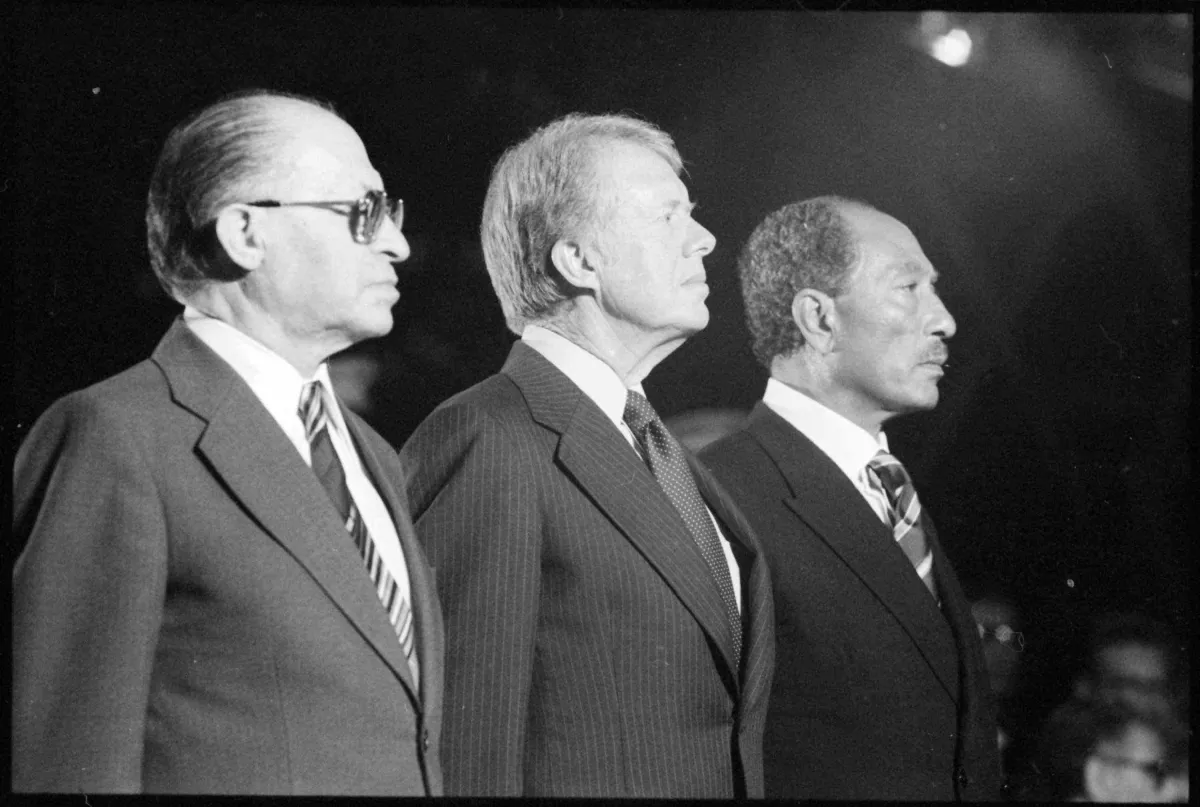 Photo: Camp David Accords, via www.palquest.org
The conditionality framework exists on paper. It has rarely functioned in practice. And the lawmakers who built that framework have shown little appetite for enforcing it, because enforcement would require difficult diplomatic confrontations that bureaucratic Washington is structurally designed to avoid.
The Constitutional and Fiscal Conservative Case
The conservative case for foreign aid reform does not rest on isolationism — a charge that critics will reach for reflexively, and which should be addressed directly. The United States has genuine national interests that are served by strategic assistance to allies, by investment in global health security that prevents pandemic blowback, and by military cooperation that extends American influence at a fraction of the cost of direct intervention. That case is real and should be made honestly.
But 'some foreign assistance serves American interests' is a very different proposition from 'the current foreign assistance apparatus, at its current scale, with its current accountability standards, serves American interests.' The latter claim has no serious evidentiary basis. What exists is an entrenched bureaucratic and contracting ecosystem — USAID alone employs thousands of direct-hire staff and channels funds through hundreds of implementing partners — that has developed powerful institutional incentives for perpetuating itself regardless of results.
The constitutional argument is equally straightforward. Article I vests the power of the purse in Congress. The American taxpayer, through their elected representatives, is entitled to know what their money is buying abroad. When the GAO finds that billions cannot be accounted for, when SIGAR documents systematic waste across a two-decade reconstruction effort, and when the State Department routinely declines to provide Congress with granular program-level spending data, the constitutional accountability structure has broken down. That breakdown should concern every American who believes that representative government means something.
The Strongest Counterargument — Engaged Honestly
The most serious defense of the current foreign aid system argues that American global engagement — including development assistance, security cooperation, and multilateral contributions — buys stability that prevents far more costly conflicts and that the accounting problems, while real, do not negate the strategic value of the enterprise.
That argument deserves respect. It is not wrong that American engagement has, in some cases and in some regions, contributed to outcomes that served U.S. interests. The Marshall Plan remains the paradigm case. But the Marshall Plan was time-limited, intensively monitored, and explicitly conditioned on recipient country economic reforms. It was the opposite of the open-ended, accountability-lite assistance model that characterizes most current U.S. foreign aid. Invoking the Marshall Plan to defend USAID's current operating model is a category error — and sophisticated defenders of the aid establishment know it.
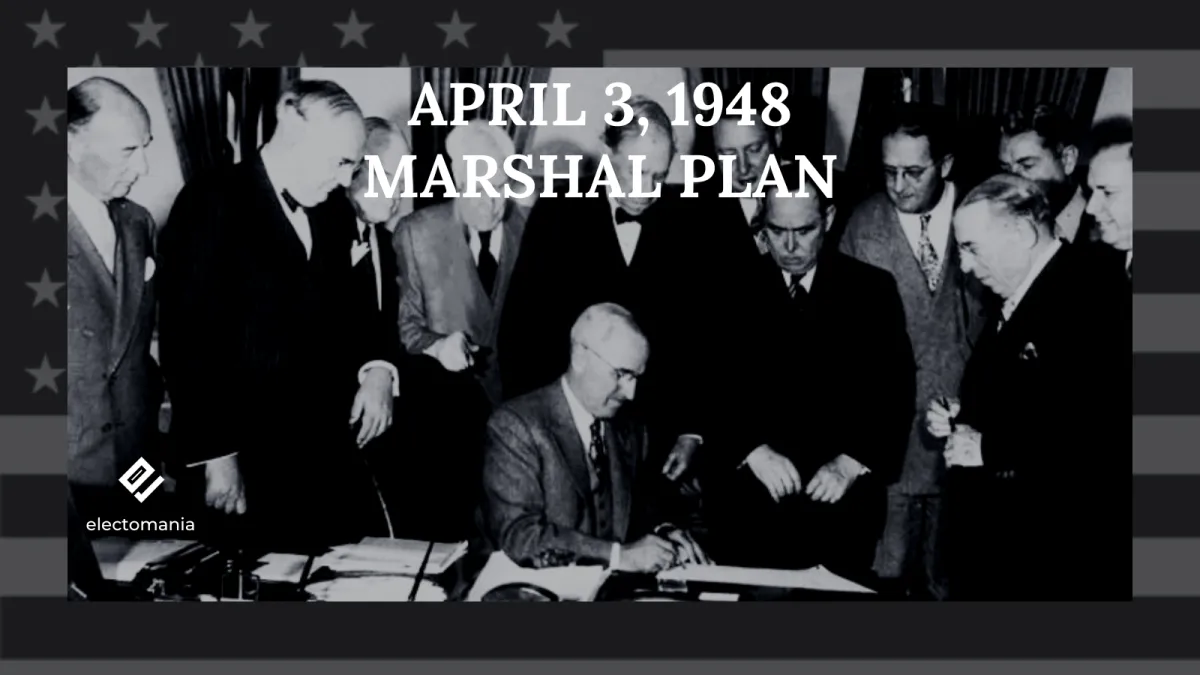 Photo: Marshall Plan, via electomania.es
What Reform Actually Looks Like
A serious foreign aid reform agenda would include, at minimum: a comprehensive GAO audit of every active USAID and State Department assistance program, with public reporting on outcomes against stated objectives; strict statutory conditionality that cannot be waived by presidential discretion alone; a national-interest standard codified in law requiring that every program demonstrate measurable benefit to American strategic, security, or economic interests; and a significant reduction in the implementing contractor ecosystem that currently absorbs a substantial share of every aid dollar before it reaches an intended beneficiary.
None of this is radical. Much of it has been proposed in various forms by reformers in both parties. What it lacks is the institutional momentum to overcome the bureaucratic and lobbying forces that benefit from the status quo — forces that are, not coincidentally, headquartered in the Washington metropolitan area and deeply embedded in the appropriations process.
The same politicians who tell working Americans that the country cannot afford tax relief have no difficulty finding billions for programs that cannot demonstrate results, in countries that cannot always account for the funds, serving interests that cannot always be coherently articulated. That is not fiscal conservatism. It is not even fiscal seriousness. It is the foreign aid establishment protecting itself — and it is long past time for Congress to hold it accountable.
Every dollar sent abroad without a clear national-interest justification and a credible accountability standard is a dollar taken from American taxpayers under false pretenses — and no amount of diplomatic euphemism changes that arithmetic.