The H-1B Visa Racket — How Corporate America Replaced American Tech Workers and Called It Innovation

A Program Built on a Premise That No Longer Applies
When Congress created the H-1B visa category under the Immigration Act of 1990, the logic was straightforward and defensible: American employers competing in specialized technical fields should not be hamstrung by temporary domestic talent shortages. The program was designed as a pressure valve, not a pipeline — a targeted mechanism for filling genuine gaps, with a statutory requirement that employers attest they are not displacing American workers or depressing prevailing wages.
Thirty-five years later, that statutory requirement has become one of the most successfully gamed attestation systems in federal law. The H-1B program now issues approximately 85,000 new visas annually through a lottery system, with hundreds of thousands of additional workers on existing H-1B status employed across the American economy at any given time. A disproportionate share of those visas flow not to innovative startups struggling to find niche expertise, but to large outsourcing and IT staffing firms that use the program as a systematic mechanism for labor cost arbitrage.
The Staffing Firm Loophole
The most consequential abuse of the H-1B system runs through a category of employer that Congress arguably never envisioned as a primary user: third-party IT staffing firms, many headquartered in India, that import workers en masse and then place them at client companies on a contract basis.
Firms such as Infosys, Tata Consultancy Services, Cognizant, and Wipro have historically ranked among the top H-1B recipients year after year, collectively accounting for tens of thousands of visas annually. Their business model is not to fill specialized gaps that American workers cannot fill — it is to offer client companies a cheaper alternative to American employees for roles that American workers already perform and are fully qualified to continue performing.
The Economic Policy Institute, not a conservative organization, published research documenting that H-1B workers are paid less than comparable American workers in the same occupations and regions — in some cases significantly less. EPI researchers found that the wage floors set by the Department of Labor's prevailing wage levels were calibrated so low that employers could hire H-1B workers at wages below what the actual market pays American workers in the same roles. The result is a federally sanctioned wage suppression mechanism operating at scale inside the American technology sector.
The Displacement Pattern Is Documented
This is not a theoretical concern. There is a documented record of American workers being explicitly required to train their H-1B replacements as a condition of receiving severance — a practice so brazen that it generated congressional hearings and investigative journalism when it surfaced at companies including Southern California Edison, Disney, and Abbott Laboratories in the 2010s.
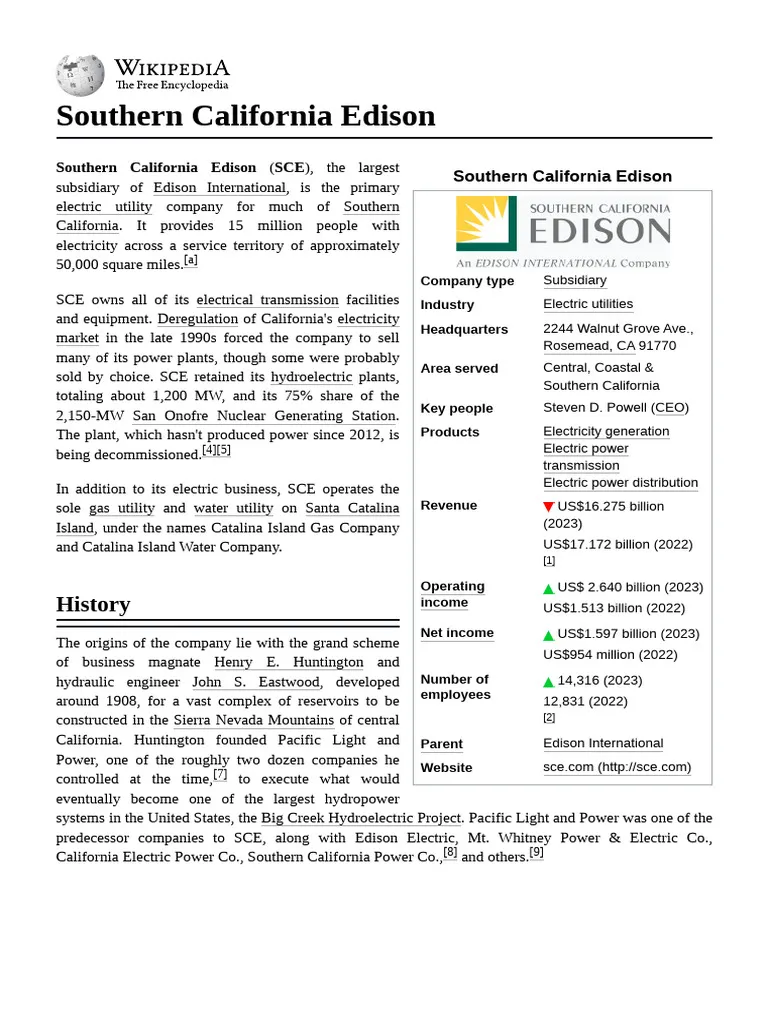 Photo: Southern California Edison, via imgv2-2-f.scribdassets.com
In each of those cases, the pattern was the same: American IT workers were informed their positions were being eliminated, told they would receive severance only if they trained incoming H-1B contractors to perform their jobs, and then let go. The H-1B workers were placed by staffing firms at rates that cost the client companies substantially less than the American employees they replaced.
Congress held hearings. Witnesses testified under oath. Senators from both parties expressed outrage. The law was not changed in any meaningful way, because the technology industry's lobbying infrastructure — one of the most formidable in Washington — ensured that reform efforts stalled at the committee level.
Silicon Valley's Self-Serving Narrative
The technology industry's public position on H-1B reform is a masterpiece of rhetorical misdirection. Companies like Google, Apple, Microsoft, and Meta consistently argue that restricting the H-1B program would cripple American innovation by cutting off access to global talent. Their lobbying groups produce reports warning of catastrophic consequences for the tech sector if visa caps are tightened.
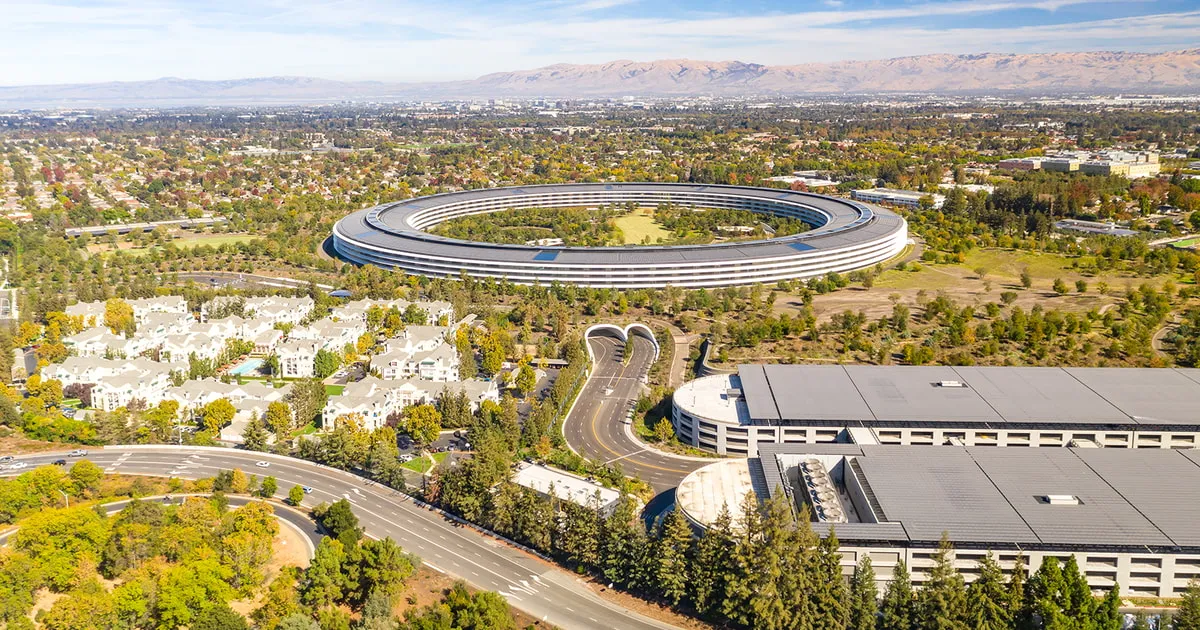 Photo: Silicon Valley, via cdn.getyourguide.com
This argument has a kernel of truth embedded in it, and that kernel deserves acknowledgment. There are genuinely specialized roles — cutting-edge AI research positions, for instance — where the global talent pool is small and American universities may not produce sufficient graduates. A blanket elimination of the H-1B program would create real problems for a small subset of employers with legitimate needs.
But that kernel is being used to justify a program that, in practice, operates at a scale and in a manner that has almost nothing to do with recruiting rare geniuses. The bulk of H-1B usage is concentrated in relatively standardized IT functions — software development, systems administration, data management — that hundreds of thousands of American graduates enter the workforce to perform every year. The argument that America cannot produce enough qualified software engineers to staff its own technology industry is not credible. It is a talking point that conflates the marginal case with the median case, and it has been extraordinarily effective at preventing reform.
The Conservative Case for Fixing This
The H-1B debate has historically been complicated on the right, because it sits at the intersection of two competing conservative instincts: skepticism of immigration as a vector for labor displacement, and sympathy for employers' desire to hire freely in competitive global markets.
But the correct conservative position here is not difficult to identify. Free markets require honest markets. A program that allows employers to circumvent the actual labor market — to import cheaper substitutes for American workers rather than compete for American workers through wages and working conditions — is not a free market mechanism. It is a subsidy to corporate labor buyers at the expense of American workers, administered by the federal government and enforced through a visa system.
The Trump administration, in both its first and second terms, has shown more willingness than any recent administration to scrutinize H-1B abuse, raising wage floor requirements and increasing audit activity at staffing firms. These are the right instincts. The question is whether the political will exists to follow them to their logical conclusion against an industry that donates heavily to politicians of both parties.
American workers built Silicon Valley. The least Washington owes them is a visa program that doesn't systematically undercut the value of their labor.