Blind Justice Is the Only Justice — How 'Equity Sentencing' Puts Politics on the Scale
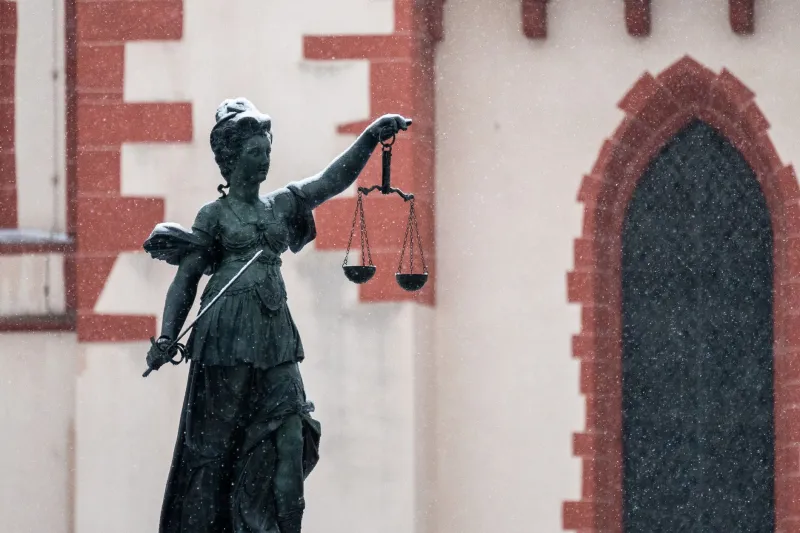
The Scales Are No Longer Blind
In Multnomah County, Oregon, in Alameda County, California, and in dozens of jurisdictions from Philadelphia to St. Louis, a quiet revolution has been underway in how prosecutors and judges approach criminal sentencing. The movement travels under the banner of "equity" — the idea that because racial disparities exist in incarceration rates, the remedy is to apply deliberate leniency to defendants from certain demographic groups. It sounds, to its advocates, like justice finally corrected. In practice, it is something closer to justice abandoned.
 Photo: Multnomah County, Oregon, via uscountymaps.com
This is not a fringe academic theory anymore. It is operational policy in some of America's largest cities, embedded in prosecutorial discretion guidelines, diversion program eligibility criteria, and judicial sentencing frameworks that explicitly weigh a defendant's background — including race — as a mitigating factor. And while the architects of these policies celebrate declining incarceration numbers as moral progress, the neighborhoods absorbing the consequences are asking a harder question: progress for whom?
What 'Equity Sentencing' Actually Looks Like in Practice
The mechanics vary by jurisdiction, but the pattern is consistent. Progressive district attorneys — many of them backed by George Soros-affiliated political action committees, as documented by the Capital Research Center — have issued internal charging guidelines that instruct prosecutors to seek reduced charges or avoid incarceration for defendants whose criminal history is attributed to "systemic disadvantage." In some cases, this means declining to prosecute entire categories of offenses. In others, it means recommending non-custodial sentences for crimes that would historically carry prison time.
In San Francisco under former DA Chesa Boudin, the office declined to prosecute a significant share of felony cases referred by police, a pattern confirmed by the city's own data and cited in the successful 2022 recall campaign that removed him from office. In Philadelphia, DA Larry Krasner's office saw homicide rates climb sharply in the years following his 2017 election, even as his office reduced the use of cash bail and pursued shorter sentences. Philadelphia recorded over 500 homicides in both 2021 and 2022 — figures not seen since the crack epidemic of the early 1990s.
Krasner and his allies argue the correlation is not causation. They point to national crime trends, pandemic disruptions, and gun availability as confounding factors. These are legitimate variables. But the strongest version of the counter-argument still cannot explain why cities that maintained or strengthened enforcement — Jacksonville, Florida; Fort Worth, Texas; and New York City during its mid-2010s crime-reduction period — did not experience the same trajectory. Policy choices have consequences, and pretending otherwise is not analysis; it is advocacy.
Recidivism and the Cost of Misplaced Leniency
The empirical case against equity-driven sentencing leniency is not merely ideological — it is statistical. The Bureau of Justice Statistics' most comprehensive recidivism study, tracking prisoners released in 2008 across 30 states, found that 83 percent were arrested at least once within nine years of release. Violent offenders recidivate at higher rates than non-violent ones. The suggestion that reduced sentences and avoided prosecutions for violent crimes will produce safer communities runs directly against this data.
More troubling still is who bears the cost when these policies fail. It is not the progressive prosecutor in his office, nor the academic criminologist publishing in peer-reviewed journals. It is the Black grandmother in North Philadelphia whose block has become a free-fire zone. It is the Latino small business owner in Oakland who has watched his neighborhood emptied of customers because foot traffic is no longer safe. The communities that progressive reformers claim to champion are, with grim irony, the communities most devastated when deterrence collapses.
A 2023 Manhattan Institute analysis of crime trends in reform-era cities found that homicide increases were disproportionately concentrated in minority neighborhoods — the precise communities whose "over-incarceration" the reform movement claims to address. The data does not suggest a trade-off between safety and equity. It suggests that the reform model is failing on both dimensions simultaneously.
Equal Justice Means Equal Justice — Not Calibrated Justice
The constitutional and moral objection to equity sentencing deserves to be stated plainly: the Fourteenth Amendment's equal protection clause does not permit the government to treat individuals differently based on race, whether that differential treatment is punitive or lenient. A justice system that applies lighter consequences to one defendant than another for the same crime, on the basis of demographic identity, is not a reformed justice system. It is a discriminatory one — just with the discrimination running in a different direction.
Conservatives have long argued that the original promise of civil rights — equal treatment under a color-blind law — is the correct destination. The equity movement's answer is that color-blindness is itself a form of racism because it ignores historical context. That argument deserves engagement rather than dismissal. Historical injustices in American law enforcement are real and documented. But the remedy for past discrimination is not present discrimination. It is rigorous, consistent, impartial enforcement of the law — combined with the kind of economic opportunity and community investment that actually reduces crime at the source.
The thumb on the scale of justice, regardless of which direction it presses, is still a corruption of the instrument.
What the Political Landscape Signals
The recall of Chesa Boudin in San Francisco — one of the most liberal cities in America — was not an isolated event. It was a data point in a broader pattern of voter rejection of soft-on-crime progressivism that cut across racial and partisan lines. Lee Zeldin's unexpectedly strong performance in the 2022 New York gubernatorial race, driven almost entirely by public safety concerns, confirmed that crime is no longer a wedge issue that reliably benefits the left. It has become one that reliably benefits the right.
The 2024 election results reinforced that message. Voters in competitive districts punished Democrats who were perceived as insufficiently serious about public safety, and rewarded candidates who promised a return to consequence-based enforcement. If the progressive prosecutorial movement does not reckon honestly with what its policies have produced, it will continue to hand conservatives one of the most potent electoral arguments available.
Equal justice under law is not a conservative slogan. It is the inscription above the entrance to the United States Supreme Court — and it means exactly what it says.
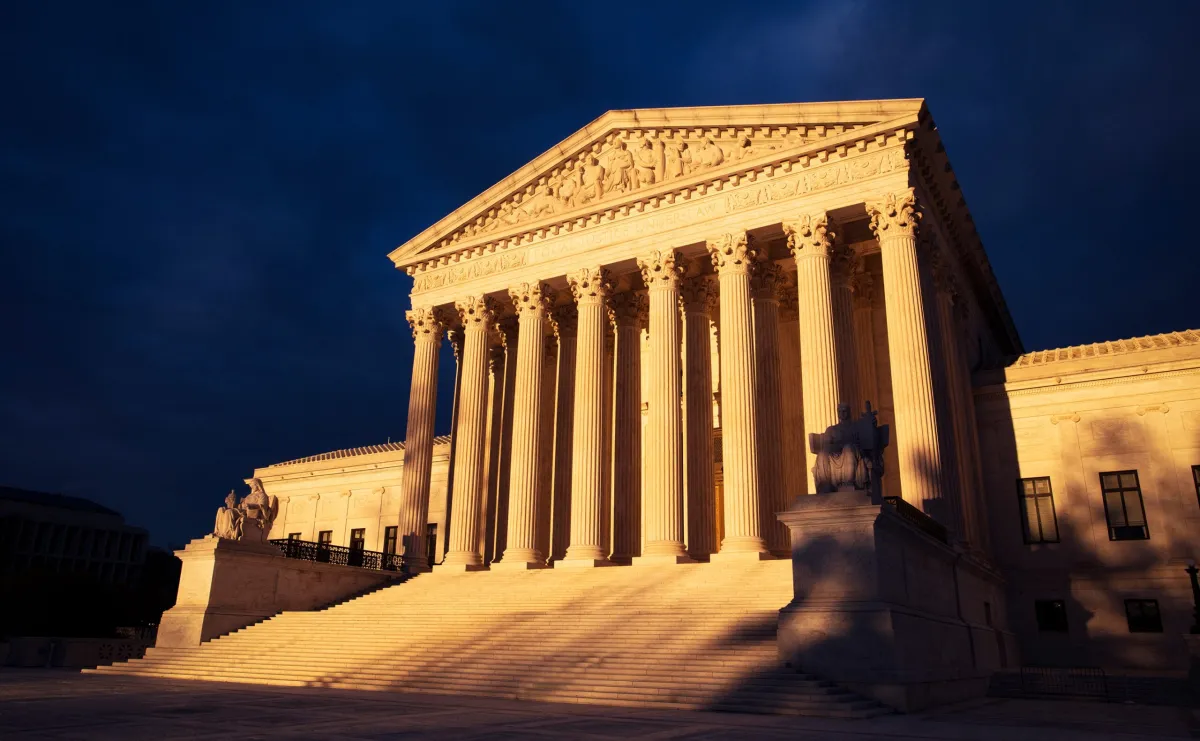 Photo: United States Supreme Court, via katiecouric.com
A justice system that adjusts the scales based on identity is not more equitable than the one it replaced — it is simply unjust in a different direction, and the communities it claims to serve are paying for that distinction in blood.