Campus Conduct Codes Are Thought Police in Academic Clothing — And Conservative Students Are the Target
In the fall of 2023, a tenured professor at Hamline University in Minnesota was effectively pushed out of her position after showing a centuries-old painting of the Prophet Muhammad in an art history course — a pedagogically standard practice that drew a formal complaint and administrative condemnation before national scrutiny forced a partial reversal. Around the same time, campus chapters of Students for Justice in Palestine were posting content across dozens of universities that, by any neutral reading of institutional harassment policies, would have triggered immediate review if it had come from a conservative student organization. In most cases, it did not. These are not isolated anecdotes. They are a pattern — and the data confirms it.
What the Numbers Actually Show
The Foundation for Individual Rights and Expression, better known as FIRE, publishes an annual College Free Speech Rankings that surveys more than 55,000 students across nearly 250 institutions. The 2024 report is not encouraging. Fully 66 percent of students reported self-censoring in class at least some of the time. More revealing still, conservative and Republican-identifying students reported self-censoring at significantly higher rates than their liberal peers — not because they have less to say, but because they have more reason to fear the consequences of saying it.
FIRE's Scholars Under Fire database, which tracks attempts to sanction or terminate faculty for protected expression, tells a similar story. While the database captures cases across the ideological spectrum, the directional pressure is unmistakable: conservative and heterodox faculty face disproportionate formal complaints, investigation, and termination proceedings relative to their share of the academic workforce. A 2021 analysis by political scientist Samuel Abrams found that for every conservative faculty member at a liberal arts college, there were roughly 12.4 liberals — a ratio that has only widened since. When the faculty hiring pipeline is that ideologically lopsided, the enforcement culture of conduct codes inevitably reflects it.
Vagueness as a Feature, Not a Bug
The mechanics of campus speech suppression deserve close attention, because the tool is rarely a blunt ban. Instead, universities maintain conduct codes written with deliberate elasticity — prohibiting speech that creates a 'hostile environment,' causes 'emotional harm,' or constitutes 'discriminatory harassment' based on identity characteristics. On paper, these standards sound reasonable. In practice, they hand enormous discretionary power to campus administrators who, by every measurable metric, skew heavily left of center.
Consider what that discretion produces. A conservative student group inviting a speaker who opposes affirmative action routinely faces venue denials, security fee impositions designed to price out the event, and formal protests that administrators decline to discipline. Meanwhile, campus events featuring speakers who advocate for policies conservatives find genuinely threatening — from open borders to the dismantling of constitutional structures — proceed without incident. The asymmetry is not incidental. It is structural.
FIRE has identified more than 1,000 active speech codes at American universities that it rates as 'clearly unconstitutional' under First Amendment standards — and that is only among public institutions, where the Constitution applies directly. Private universities, which enroll the majority of American college students, operate under contractual free speech commitments they routinely breach without legal consequence.
The Legal Landscape Is Shifting — Slowly
Courts have not been entirely passive. The Supreme Court's ruling in Mahanoy Area School District v. B.L. (2021) reinforced that student speech protections extend beyond the physical campus, and lower courts have struck down a series of overbroad university speech codes in recent years. In Speech First, Inc. v. Schlissel (2020), the Sixth Circuit ruled that the University of Michigan's 'bias response team' system — which allowed anonymous complaints and administrative investigation of protected speech — posed a sufficient chilling effect to warrant preliminary injunction.
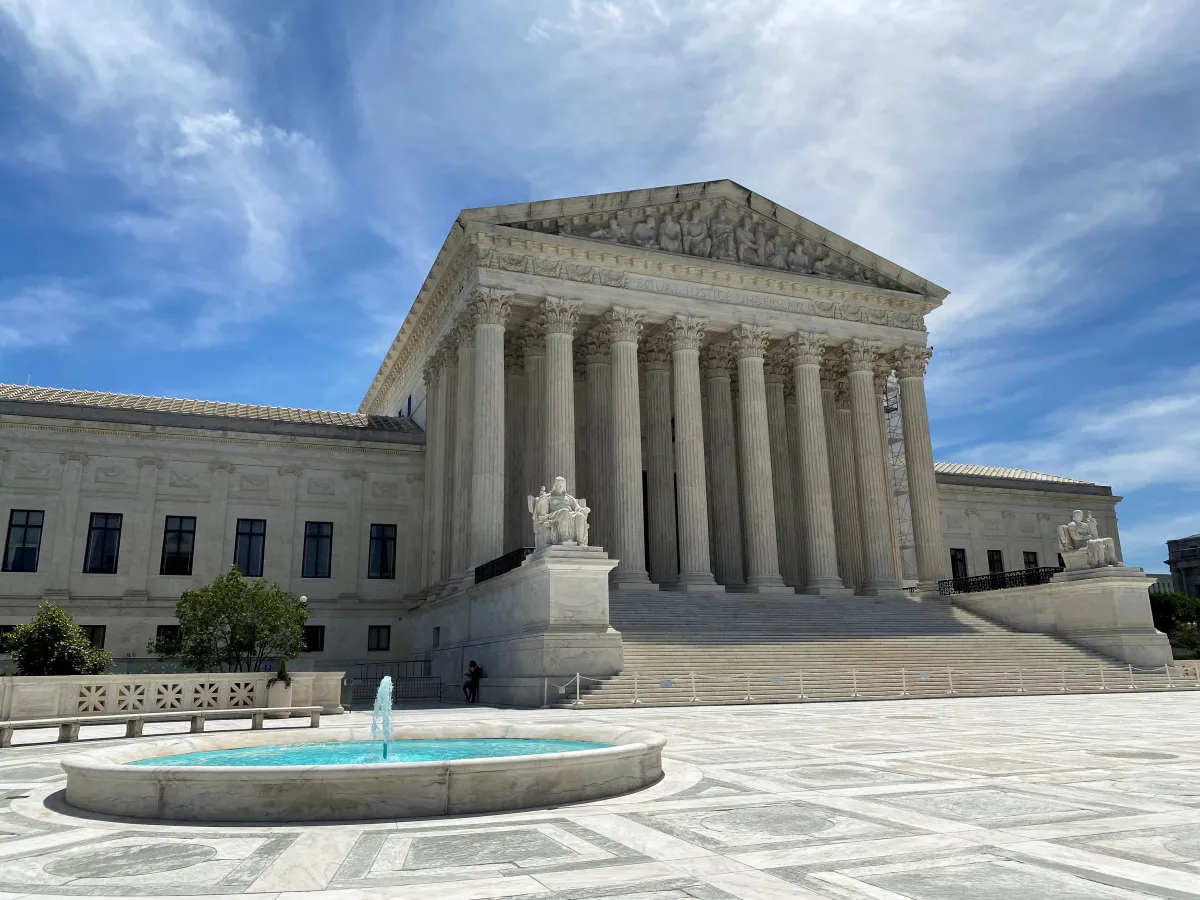 Photo: Supreme Court, via cloudfront-us-east-2.images.arcpublishing.com
 Photo: University of Michigan, via 2.bp.blogspot.com
But litigation is slow, expensive, and reactive. For every student who has the resources and fortitude to sue, hundreds more simply go quiet. The administrative deterrent works precisely because most people will not fight it.
The Strongest Counterargument — and Why It Fails
Defenders of campus conduct codes make a serious point worth engaging honestly: universities have a legitimate interest in ensuring that all students — including minority students who have historically faced genuine harassment — can participate fully in academic life without being subjected to targeted intimidation. That principle is correct, and no serious conservative disputes it.
The problem is that the current regime does not deliver that outcome. It delivers selective protection based on ideological identity rather than consistent protection based on conduct. When a Jewish student faces harassment on a campus that has spent years building elaborate anti-discrimination infrastructure, and administrators respond with equivocation — as occurred with striking frequency after October 7, 2023 — the conduct code framework reveals itself as something other than principled. It is political. And a system that protects some students from hostile expression while subjecting others to it based on which ideas they hold is not a civil rights framework. It is a censorship architecture with civil rights branding.
What Conservative Governance Can Actually Do
The policy levers exist. Congress can condition federal research funding on demonstrated compliance with First Amendment standards for public universities, and on contractual free speech commitments for private ones — a framework already proposed in multiple legislative sessions and long overdue for serious floor consideration. State legislatures in Florida, Texas, and elsewhere have moved to codify free expression protections and prohibit ideological litmus tests in faculty hiring. These are not culture-war stunts; they are structural corrections to a structural problem.
The deeper issue is one of institutional accountability. Administrators who run bias response teams, issue no-platforming decisions, and selectively enforce conduct codes face essentially no professional consequences for doing so. That insulation from accountability is itself a governance failure — one that conservative policymakers at the state and federal level have both the authority and the obligation to address.
The university was supposed to be the place where ideas competed on their merits. What American higher education has built instead is a bureaucratic apparatus designed to ensure that only certain ideas are permitted to compete at all — and the conservative students and faculty bearing the cost of that system are right to demand better.
The most dangerous thing on a modern American university campus is not a provocative idea — it is an administrator with a vague conduct code and a political preference for enforcing it.