Soft Discipline, Hard Consequences — The Restorative Justice Experiment Is Failing America's Students

The Experiment Nobody Voted to Run on Their Children
The restorative justice movement entered American public education gradually, then all at once. Beginning in the early 2010s and accelerating sharply after 2014 — when the Obama administration's Department of Education issued guidance warning districts that racially disproportionate suspension rates could trigger federal civil rights investigations — school systems across the country began systematically dismantling the disciplinary frameworks that had maintained classroom order for generations.
Out went suspensions and expulsions for a widening range of offenses. In came restorative circles, where students who had disrupted, threatened, or assaulted peers were invited to sit in facilitated dialogue sessions and discuss their feelings. Counselors replaced consequences. Reflection replaced accountability. And in district after district, the results followed a pattern that should have prompted serious policy reconsideration years ago — but didn't, because the ideology driving the experiment was more durable than the evidence against it.
What the Data Shows — and What Districts Tried to Hide
The most rigorous large-scale examination of restorative justice outcomes in American schools came from a RAND Corporation study of Pittsburgh Public Schools, one of the earliest and most ambitious implementations of the model. Published in 2020, the study found that restorative justice practices did not reduce suspensions in a sustained way and showed no statistically significant improvement in academic achievement for students in schools that adopted the program. Teacher satisfaction in those schools actually declined.
 Photo: RAND Corporation, via cdnn1.inosmi.ru
 Photo: Pittsburgh Public Schools, via dwu3muksussyh.cloudfront.net
Pittsburgh was not an outlier. A 2019 study published in the Journal of Criminal Justice examining California school districts found that while suspension rates fell following the adoption of restorative practices — the metric administrators used to declare success — rates of in-school behavioral incidents did not fall correspondingly. Students were being disciplined less, but they were not behaving better. The disruptions were simply being recorded differently, or not recorded at all.
This distinction matters enormously, because the headline statistic that restorative justice advocates cite — reduced suspension rates — measures an administrative output, not an educational outcome. Telling a teacher she can no longer send a repeatedly disruptive student to the principal's office does not make the student less disruptive. It makes the teacher less able to protect her classroom.
The Teachers Who Are Leaving — and Why
The human cost of this policy failure is most visible in teacher attrition data. The National Education Association — hardly a conservative organization — published survey results in 2023 indicating that classroom safety and student behavior were among the top reasons teachers cited for considering leaving the profession. A separate survey by the RAND Corporation found that roughly half of teachers reported that student misbehavior had worsened over the preceding several years, with middle school teachers reporting the sharpest deterioration.
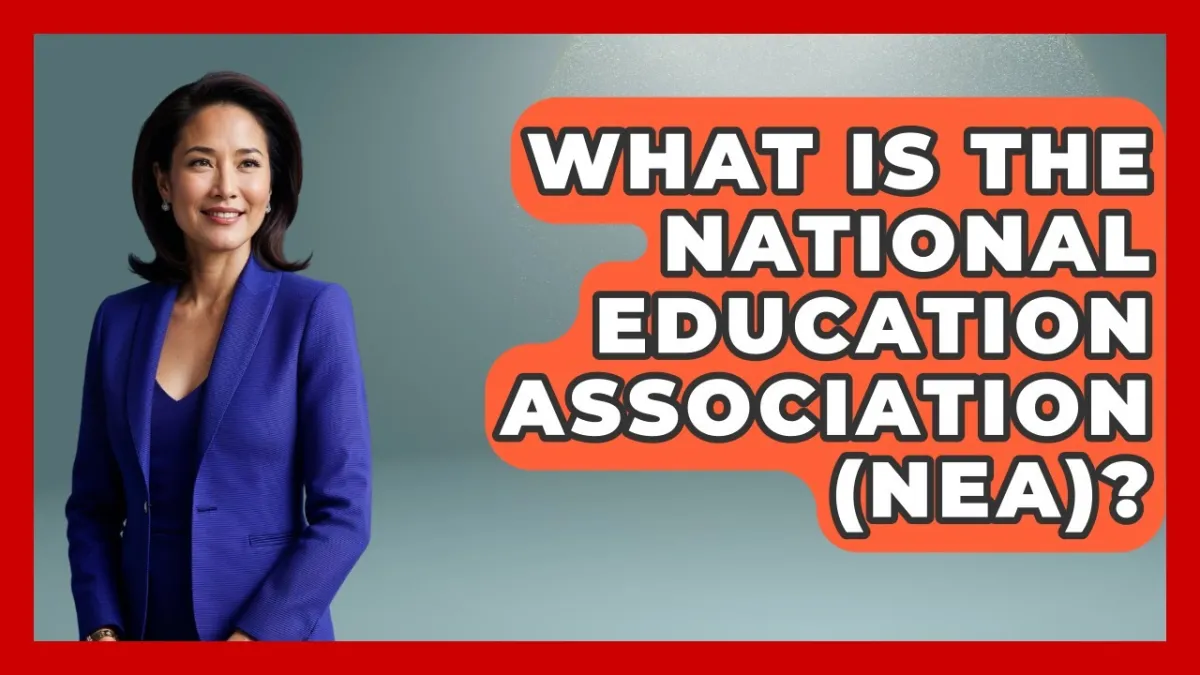 Photo: National Education Association, via i.ytimg.com
Teachers in urban districts with aggressive restorative justice implementations describe a specific and demoralizing dynamic: a small number of chronically disruptive students — sometimes as few as two or three in a given classroom — consume the majority of instructional time and administrative attention, while the rest of the class falls behind. When those students are sent to restorative circles and returned to the same classroom within hours or days without any meaningful change in behavior, teachers quickly learn that the system has no real deterrent. The message to every student in the room is that consequences are optional.
Veteran teachers with options — and the best teachers typically have options — are leaving these environments. What remains, in too many urban and suburban districts, is a revolving door of early-career teachers burning out within three years and a student population that is being failed by a system more interested in its own ideological commitments than in their education.
The Equity Argument — and Its Fatal Flaw
Proponents of restorative justice make their strongest argument on equity grounds, and it is worth taking seriously. Black and Hispanic students have historically been suspended at significantly higher rates than white students for comparable offenses, a disparity documented extensively in federal data. This is a real problem that deserves a real response.
But the restorative justice model does not actually solve the underlying problem. It addresses the disparity in suspension rates by reducing suspensions across the board — including for offenses that genuinely warrant removal from the classroom — rather than by addressing inconsistent enforcement. The result is that students of all backgrounds in the most disrupted classrooms suffer together, with the heaviest burden falling on the low-income minority students who are most dependent on public schools for their educational opportunities and who have the fewest alternatives when those schools fail to deliver a safe learning environment.
The students most harmed by chaotic classrooms are not the affluent children whose parents can hire tutors, request classroom transfers, or enroll them in private schools. They are the students that the equity advocates claim to be protecting. A discipline policy that immiserates the many in order to avoid suspending the few is not equity. It is a different kind of injustice, administered with better branding.
The Political Moment and the Path Back
There are signs that the political calculus on school discipline is shifting. Several states, including Florida and Texas, have moved legislatively to restore administrator authority over classroom removal decisions and to limit the degree to which federal equity guidance can constrain local discipline policy. Parent frustration with school disorder has been a consistent theme in school board elections since 2021, contributing to a wave of conservative victories on boards that had previously been considered safely progressive.
The Biden administration's Department of Education continued to press the Obama-era equity framework through its final months. The Trump administration has signaled a reversal of that guidance, which would restore meaningful discretion to local administrators without mandating any particular disciplinary approach.
That restoration of local authority is the right outcome. Schools that want to incorporate restorative practices as a supplementary tool — for minor infractions, for conflict resolution, for building community — should be free to do so. But no school should be pressured by federal guidance or ideological fashion into abandoning its fundamental obligation to maintain an environment where learning can actually occur.
Order in the classroom is not cruelty. It is the precondition for everything else — and the students who come to school every day ready to learn deserve to have it.