Roads to Nowhere — How the 2021 Infrastructure Bill Became a Progressive Wish List in Disguise
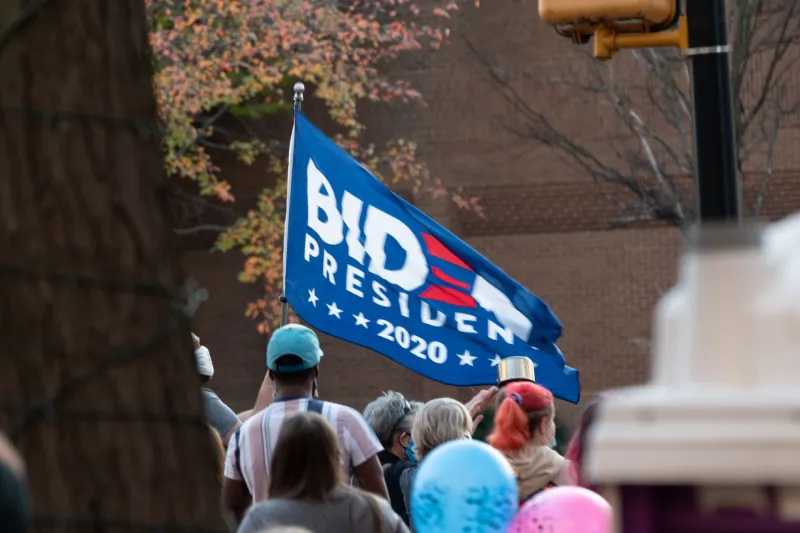
The Promise That Got the Votes
In August 2021, nineteen Republican senators crossed the aisle to hand President Biden one of his signature legislative victories. The Infrastructure Investment and Jobs Act, carrying a $1.2 trillion price tag, was pitched as a once-in-a-generation investment in the physical backbone of the United States — bridges, roads, broadband, water pipes, ports. Senate Minority Leader Mitch McConnell was not among the supporters, but those Republicans who did vote yes argued they were delivering something tangible and apolitical: concrete, steel, and fiber optic cable.
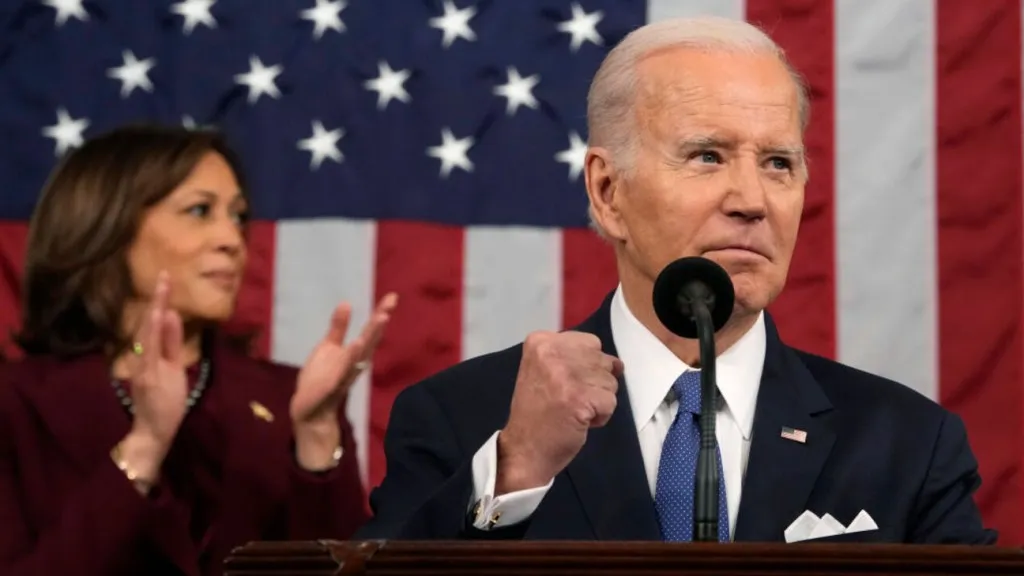 Photo: President Biden, via www.hollywoodreporter.com
They were wrong. Or, more precisely, they were outmaneuvered.
What the Biden administration's agencies proceeded to do with that money — through rulemaking, grant guidance, and executive discretion — transformed a roads bill into one of the most ideologically loaded spending packages in recent American history. The branding said infrastructure. The delivery said Green New Deal.
Where the Money Actually Went
The law allocated $7.5 billion specifically for electric vehicle charging infrastructure. As of mid-2024, after nearly three years and hundreds of millions in expenditures, the Government Accountability Office and independent journalists documented that fewer than a dozen publicly accessible chargers had been completed and operational under the federal program — a ratio of spending to output that would be scandalous in any other context. The Biden administration's own internal reviews acknowledged implementation delays, though officials attributed these to supply chain issues and permitting backlogs rather than any structural flaw in the program design.
Beyond EV charging, the law embedded what the administration termed "environmental justice" criteria into the grant application process for transportation projects. The Federal Highway Administration issued guidance requiring states to factor in equity metrics — defined along racial and income lines — when prioritizing which roads and bridges received federal dollars. This was not in the bill's legislative text as passed. It was inserted by agency rulemaking after the fact, a move that effectively rewrote congressional intent without a single additional vote.
The law also directed billions toward climate resilience programs, reconnecting communities grants aimed at removing highways built through minority neighborhoods, and a range of non-transportation initiatives housed under the broad umbrella of "infrastructure." The reconnecting communities program, while defensible in isolation, consumed funding that many state DOT officials had expected to direct toward structural repairs rated in poor condition by the American Society of Civil Engineers.
The Bipartisan Cover Was the Point
Conservatives who warned at the time that this bill was a Trojan horse were dismissed as obstructionists who hated roads. That framing was deliberate. The White House understood that attaching a bipartisan imprimatur to the legislation would give progressive agencies the political cover to implement it aggressively. Once the votes were cast and the president signed the bill on the South Lawn, the details belonged to the bureaucracy — and the bureaucracy had its own agenda.
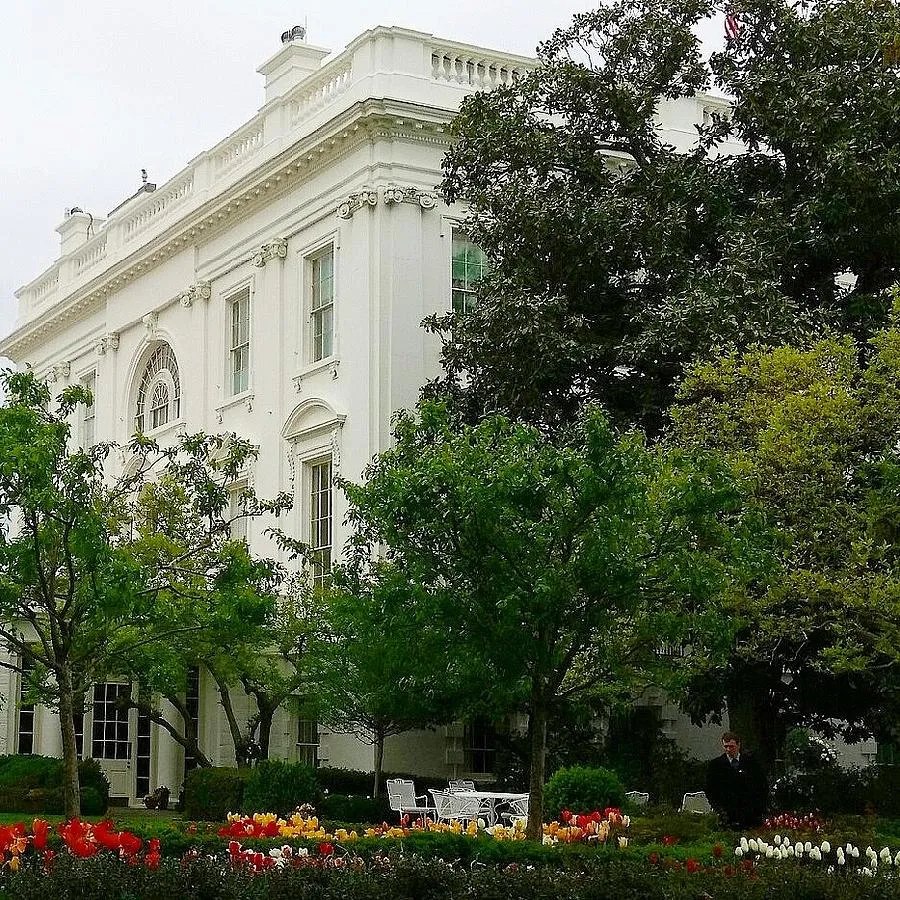 Photo: South Lawn, via images.fineartamerica.com
This is not a novel tactic. It is, in fact, the standard operating procedure of the modern administrative state. Congress passes broadly worded legislation; executive agencies fill in the blanks according to the ideological priorities of whoever holds the White House. The infrastructure bill was simply a particularly glaring example, because the gap between the bill's public branding and its ideological delivery was so wide.
Republicans who voted for it — among them Senators Rob Portman of Ohio, Lisa Murkowski of Alaska, and Susan Collins of Maine — were not naive. But they were operating under the reasonable assumption that a bill explicitly labeled as infrastructure would be implemented as infrastructure. What they failed to account for was the degree to which the Biden administration viewed every piece of legislation as an opportunity to advance climate and equity objectives regardless of the statutory text.
The Strongest Counterargument — and Why It Falls Short
Defenders of the law will note, not unreasonably, that EV charging and climate resilience are themselves forms of infrastructure for the 21st century. They will argue that the country's transportation network cannot be future-proofed without accounting for the shift away from internal combustion engines, and that communities historically bypassed by federal investment deserve targeted remediation.
These are serious arguments. They deserve serious engagement rather than dismissal.
But they are also arguments that should have been made openly, debated on the merits, and voted on explicitly. If the Democratic majority in 2021 wanted to pass a climate and equity transformation bill, they had the votes — barely — to do so through reconciliation, as they eventually did with the Inflation Reduction Act. Instead, they chose to launder those priorities through a bill marketed as something neutral and practical, precisely because they knew that marketing would attract Republican votes that a frankly ideological bill would not.
The issue is not whether EV charging is infrastructure. The issue is whether the American public and their elected representatives were told the truth about what they were buying. They were not.
What This Means Going Forward
The Trump administration has moved to rescind or redirect several of the Biden-era grant programs embedded in the infrastructure law, including pausing portions of the EV charging buildout and reviewing the environmental justice grant criteria. These actions have been challenged in court by Democratic state attorneys general and environmental groups, and the litigation is ongoing.
The broader lesson is structural. As long as Congress continues to pass broadly worded legislation and delegate implementation authority to executive agencies without rigorous oversight, the gap between what bills are called and what they do will remain a feature, not a bug, of progressive governance. Closing that gap requires not just winning elections but reforming the administrative machinery that operates regardless of who wins.
The 2021 infrastructure bill was not a bipartisan achievement. It was a bipartisan label on a partisan product — and the Republicans who lent it their names are still waiting for the bridges.