The WHO Power Grab That Didn't Go Away — A Pandemic Treaty Still Threatens American Sovereignty
The Treaty That Refuses to Die
In the spring of 2024, the World Health Organization's member states failed to reach consensus on a finalized pandemic treaty before a self-imposed deadline, and much of the American press treated the story as closed. It was not closed. Negotiations over both the standalone pandemic agreement — formally called the WHO Pandemic Accord — and a parallel set of amendments to the existing International Health Regulations (IHR) have continued, with WHO Director-General Tedros Adhanom Ghebreyesus repeatedly signaling his intention to see binding international commitments in place before the next major health emergency emerges.
For Americans paying attention, the stakes of those ongoing negotiations are significant. What is being constructed, piece by piece, in Geneva conference rooms is a framework that would, in its most expansive interpretation, give an unelected international bureaucracy meaningful leverage over how sovereign nations respond to declared health emergencies — including the United States. The fact that this process is proceeding with minimal public debate, and that the Biden administration's negotiating posture was broadly favorable to expanded WHO authority, makes the current moment a critical one for anyone who believes that American health policy should be made by Americans.
What the Documents Actually Say
Straight reporting first: the WHO pandemic negotiations encompass two distinct but related tracks. The first is the new Pandemic Accord, a treaty-level instrument meant to establish global norms for pandemic prevention, preparedness, and response. The second is a set of proposed amendments to the International Health Regulations of 2005 — the existing legal framework that governs how the WHO and member states coordinate during international health emergencies.
The IHR amendments are, in some respects, the more immediately consequential track, because the IHR already has the force of international law for member states that have not formally opted out of specific provisions. Among the amendments that have been under consideration: language that would strengthen the WHO Director-General's authority to declare a Public Health Emergency of International Concern (PHEIC), provisions that would require member states to develop national pandemic plans subject to WHO review, and mechanisms that could obligate countries to share biological samples and data with the WHO on timelines and terms set by the organization rather than the member state.
Proponents of the treaty process argue that these are coordination mechanisms, not mandates — that the WHO has no army and cannot compel compliance from sovereign governments. That is technically accurate and substantially misleading. International legal frameworks create normative pressure, reputational consequences, and downstream domestic legal obligations that function as de facto mandates even without formal enforcement mechanisms. The argument that a binding international agreement is toothless because it lacks a compliance army is not a reassurance — it is a description of how international law actually operates.
The Biden Negotiating Legacy
The Trump administration withdrew the United States from the WHO in 2020, and the Biden administration rejoined in January 2021 — one of its first executive actions. What followed was a negotiating posture that, according to reporting from outlets including The Hill and multiple public health policy analysts, was broadly supportive of expanded WHO authority and ambitious timelines for reaching binding commitments.
Among the positions advanced by Biden-era U.S. negotiators: support for a strong "equity" framework that would obligate wealthier nations to transfer medical countermeasures and intellectual property to developing countries, backing for enhanced WHO surveillance authorities, and a general disposition toward multilateral commitments that critics argued prioritized international consensus over American flexibility.
The Trump administration has taken the opposite posture, initiating a second WHO withdrawal process and signaling deep skepticism of binding international health commitments. That shift matters enormously, because the United States is not simply one vote among many in Geneva — it is the WHO's largest single funder, and its negotiating position shapes what is politically achievable in the treaty process. An American administration willing to walk away from a bad deal changes the calculus for every other party at the table.
The Constitutional Firewall
Under the U.S. Constitution, any international agreement that rises to the level of a treaty requires ratification by two-thirds of the Senate — 67 votes. That threshold exists for precisely this kind of situation: commitments that would bind the United States to obligations defined by external bodies, obligations that could constrain future executive and legislative action on matters as fundamental as public health policy.
The critical legal question is whether the executive branch could characterize a WHO pandemic agreement as an executive agreement rather than a treaty, bypassing the Senate entirely. The Biden administration's broad use of executive agreements in other foreign policy contexts — and the general executive branch tendency to avoid the Senate ratification gauntlet — made this a legitimate concern. A sufficiently ambitious pandemic accord, entered into by executive agreement, could impose significant international obligations on the United States without a single Senate vote.
Senators on both sides of the aisle have pushed back on this possibility. Senator Ron Johnson of Wisconsin and a coalition of Republican senators introduced legislation requiring Senate ratification of any WHO pandemic agreement, and a bipartisan group of lawmakers sent letters to the Biden administration demanding transparency in the negotiating process. Whether that pressure would have been sufficient to force Senate consideration of a finalized agreement remains, thankfully, a hypothetical — the Trump administration's withdrawal posture has changed the immediate landscape.
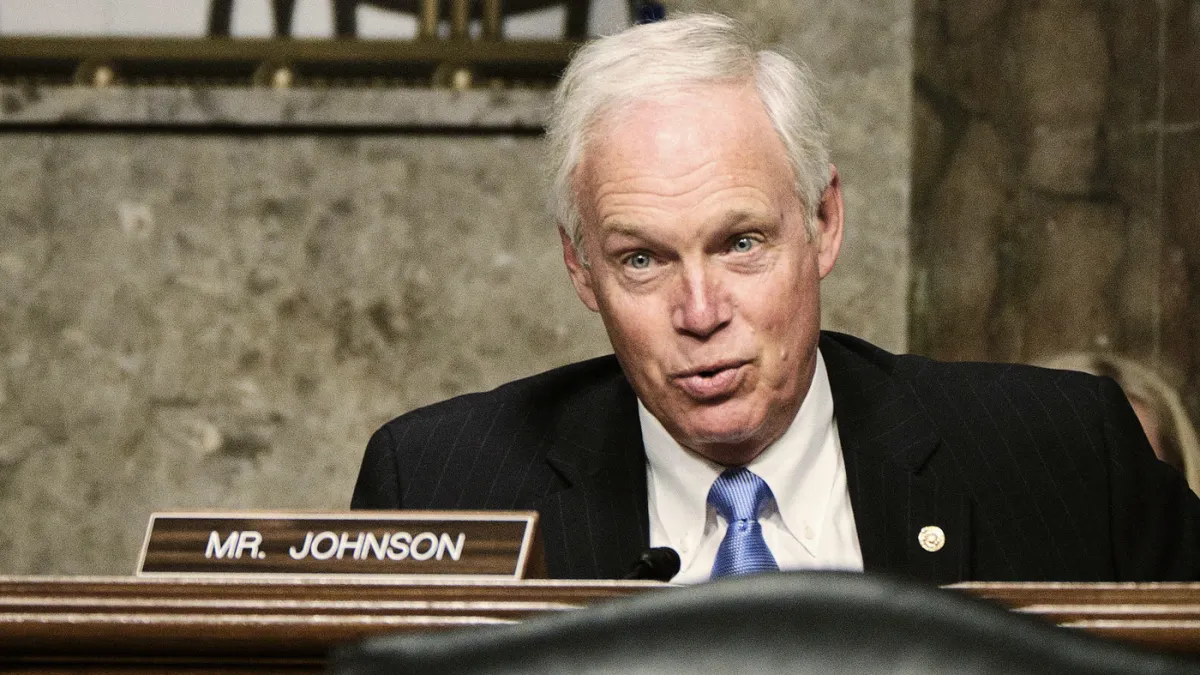 Photo: Ron Johnson, via media.npr.org
Why This Isn't Over
The strongest version of the pro-treaty argument is worth engaging directly. Pandemic diseases do not respect national borders, and the COVID-19 experience exposed genuine gaps in international coordination — delayed information sharing, competitive vaccine nationalism, and fragmented supply chains that cost lives. A framework for better international cooperation is not inherently a sovereignty threat.
Granted. But there is a meaningful difference between voluntary coordination agreements that preserve national decision-making authority and binding frameworks that shift that authority, even partially, to an international body whose leadership is not elected by, accountable to, or removable by the American people. The WHO's performance during COVID-19 — including its deference to Chinese government narratives in the critical early weeks of the outbreak, its delayed acknowledgment of human-to-human transmission, and its initial opposition to travel restrictions — does not inspire confidence that expanded WHO authority would produce better outcomes for Americans.
The question is not whether international health cooperation is valuable. It is whether the specific institutional architecture being constructed in Geneva is one that Americans should trust with meaningful authority over their lives. The answer, on the evidence, is no.
The Broader Pattern
The WHO pandemic treaty effort fits within a broader pattern of international institution-building that consistently trends toward concentrating authority in bodies that are structurally insulated from democratic accountability. The UN Migration Compact, the Paris Climate Agreement's implementation architecture, and now the pandemic treaty framework all share a common design logic: establish international norms, create compliance expectations, and gradually shift the locus of policy decisions away from elected national governments.
Conservatives have been right to resist this pattern, and the Senate's treaty ratification power is one of the clearest constitutional tools available for doing so. The WHO negotiations are not over, the pressure for a binding agreement will resume, and the next administration's negotiating posture will matter enormously.
American pandemic policy should be set by Americans — and no amount of international consensus-building in Geneva changes that foundational principle.